Table of Contents
- What is a Commercial Security Assessment?
- Why Your Business Needs a Professional Security Review
- Commercial Security Risk Assessment Checklist
- How Long Does a Security Assessment Take?
- Understanding Business Security Audit Cost
- The Professional Assessment Process
- How to Book Your Commercial Security Assessment
- Frequently Asked Questions
Last Updated: September 3, 2026
What is a Commercial Security Assessment?
A commercial security assessment is a comprehensive evaluation of your business’s physical and cyber security infrastructure, identifying vulnerabilities and recommending improvements to protect assets, personnel, and operations. Trained security professionals conduct a detailed site survey, threat identification, and vulnerability analysis to create a tailored security strategy tailored to your specific industry, building layout, operational risks, and compliance requirements. According to Gartner’s 2026 security spending analysis, organisations investing in professional security assessments see measurable improvements in incident prevention and loss prevention outcomes.
At Morayfield Locksmiths, we conduct thorough commercial security assessments that integrate electronic security solutions, access control systems, and physical security measures into a cohesive protection strategy.
Why Your Business Needs a Professional Security Review
Most businesses operate with security gaps they don’t know exist until something goes wrong. According to Australian Cyber Security Centre data, there is a cyber-attack every 10 minutes in Australia, with 43% targeting small and medium-sized enterprises. Approximately 69% of Australian businesses reported ransomware attacks over the past five years, with 84% opting to pay the ransom, according to IMARC Group (2024).
A professional security review identifies these gaps before they become incidents, establishes a baseline of your current security posture, and highlights what needs attention. The review also uncovers compliance gaps; many industries face regulatory requirements around access control, surveillance, and incident reporting that a business security audit can clarify.
The Insurance Premium Connection
One of the most overlooked benefits of a professional security assessment is its direct impact on commercial insurance premiums. Many insurers offer premium discounts for businesses that implement recommended security measures following a professional assessment.
Insurers specifically look for access control systems that restrict unauthorised entry, CCTV surveillance with adequate coverage, alarm monitoring connected to professional response services, documented security policies, and regular maintenance records showing systems are operational and tested.
Contact your insurance broker before scheduling an assessment and ask which security improvements would qualify for premium discounts.
Compliance and Regulatory Requirements
Many industries face mandatory security requirements. Retail businesses handling payment cards must comply with Payment Card Industry Data Security Standard (PCI DSS) requirements. Healthcare facilities, financial services, aged care, and government contractors all face specific regulatory obligations.
A professional assessment identifies compliance gaps specific to your industry and jurisdiction, helping you avoid penalties, failed audits, or loss of operating licences.
A professional assessment isn’t about adding more cameras or locks. It’s about understanding where your actual vulnerabilities are, fixing them strategically, and reducing both insurance costs and regulatory risk.
Commercial Security Risk Assessment Checklist
A thorough commercial security assessment covers multiple dimensions of protection. This section provides both a professional assessment framework and a self-assessment checklist you can use to evaluate your current security posture before booking a professional review.
Self-Assessment Checklist: Evaluate Your Current Security
Before investing in a professional assessment, use this checklist to identify obvious gaps and prioritise your concerns. Rate each item as Secure, Needs Improvement, or Critical Gap.
Physical Access Control
- All external doors have working locks and are kept locked when unmanned
- Loading docks, side entrances, and roof access are secured and monitored
- Windows are intact, locked, and protected (bars, film, or monitored)
- Visitor sign-in procedures are documented and enforced
- Former employees’ access credentials (keys, badges, codes) have been revoked
- Landscaping is maintained to eliminate hiding places around the building perimeter
Surveillance and Monitoring
- CCTV cameras cover all entry points and high-value asset areas
- Cameras are operational, tested monthly, and footage is retained for at least 30 days
- Alarm systems are armed when the building is unoccupied
- Alarm monitoring is connected to a professional response service
- Staff know how to operate security systems and respond to alarms
- Intercom or video entry systems are in place for visitor verification
Access Control and Credentials
- Electronic access control systems log all entries and exits
- Access levels are assigned based on job role and reviewed annually
- Terminated employees are removed from access control systems immediately
- Master keys or override codes are stored securely and access is logged
- Tailgating (unauthorised entry by following an authorised person) is actively prevented
Cyber and Network Security
- CCTV systems and access control equipment are on a separate, secured network
- Remote access to security systems requires multi-factor authentication
- Security system passwords are strong, unique, and changed regularly
- Firmware and software for security devices are updated regularly
- Backup systems protect against ransomware attacks on security footage and logs
Policies and Procedures
- Written security policies exist and are communicated to all staff
- Incident response procedures are documented and staff are trained
- Security incidents are logged and reviewed for patterns
- Third-party contractors are vetted and supervised
- Sensitive areas have restricted access
Compliance and Documentation
- Your industry’s specific security requirements are documented and tracked
- Insurance requirements for security measures are known and met
- Security system maintenance records are kept and available for audit
- Risk assessments have been conducted in the past three years
Scoring Your Self-Assessment
- 0-5 Critical Gaps: Schedule a professional assessment immediately.
- 6-12 Critical Gaps: Book an assessment within the next month.
- 13+ Needs Improvement items: A professional assessment will help prioritise improvements.
- Mostly Secure: A professional assessment can identify blind spots and optimise your existing systems.
Use this checklist to prepare for your professional assessment and share results with the security professional so they can focus on your highest-priority gaps.
Physical Security Measures
Physical security forms the first line of defence, including perimeter security, building access points, and environmental controls that prevent unauthorised entry and protect against theft or vandalism.
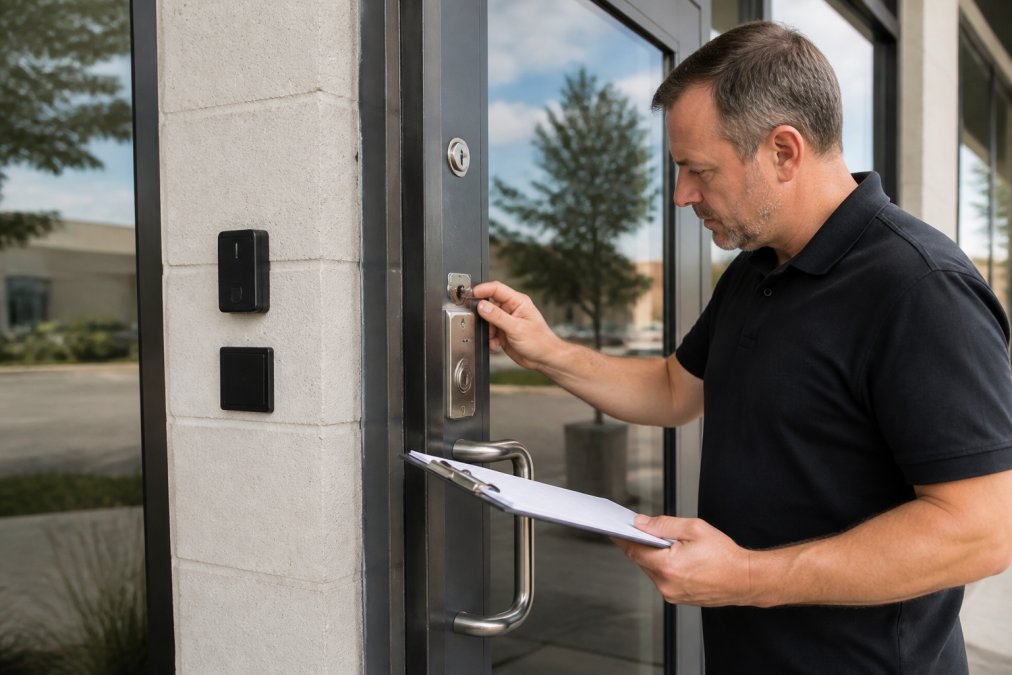
Key physical security elements include perimeter security (fencing, gates, landscaping, lighting), entry points (doors, windows, loading docks, roof access), adequate illumination around entrances and parking areas, and vegetation management to eliminate hiding places.
A single unsecured loading dock or back entrance can undermine an otherwise solid security infrastructure. Physical security is only as strong as its weakest access point.
Electronic Security Solutions
Electronic security solutions provide continuous monitoring, automated responses, and detailed records of access and incidents. CCTV surveillance captures visual evidence, deters criminal activity, and provides data for investigations. Modern systems use AI-powered video analytics to automatically detect unusual movement, loitering, or abandoned items.
Alarm monitoring connects your property to professional response teams that verify incidents and dispatch authorities immediately. Access control systems replace traditional keys with electronic credentials, badges, keypads, or biometric readers that log every entry and exit. Intercom systems enable communication with visitors before granting entry, reducing tailgating and unauthorised access.
Cyber and Physical Integration
Modern security assessments evaluate how your physical systems connect to your IT infrastructure, including network security for access control and surveillance systems, data encryption for stored footage and access logs, backup systems that protect against ransomware attacks, and secure authentication for remote monitoring.
According to H3C Plus Pty Ltd (2025), security platforms are becoming increasingly IP-native and cloud-enabled (h3c.com). Organisations treating physical and cyber security as separate challenges miss critical integration points.
How Long Does a Security Assessment Take?
Most mid-sized commercial facilities require between 4 to 8 hours for a comprehensive assessment. A small office might complete in 2 to 3 hours, while a large multi-building property could require 1 to 2 days. The timeline depends on property size, complexity, scope of evaluation, and whether you operate across multiple locations.
Schedule your assessment during normal operating hours when staff are present so assessors can observe actual workflows, access patterns, and security procedures.
Understanding Business Security Audit Cost
Pricing for a professional business security audit varies based on property size, complexity, and scope of recommendations. Factors affecting cost include property size, building complexity, current systems, regulatory requirements, and recommendation scope.
For current pricing and a customised quote, contact Morayfield Locksmiths directly. Our team assesses your specific needs and provides transparent, upfront pricing without hidden costs.
The Professional Assessment Process
A structured assessment process ensures nothing gets overlooked and recommendations align with your actual risks and budget.
Threat Identification and Vulnerability Analysis
The assessment begins with threat identification, understanding what risks your business actually faces. A retail business faces different threats than a data centre or medical facility. The assessment identifies threats relevant to your context, then evaluates your current controls against those specific threats.
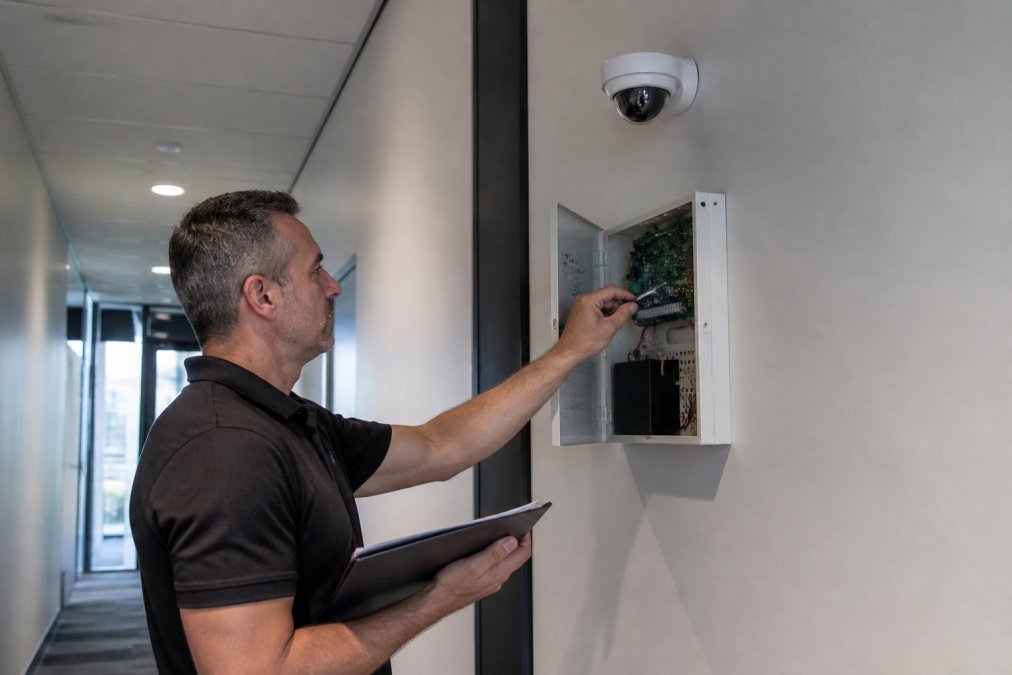
Vulnerability analysis examines where your existing security measures fall short, including testing access points, reviewing system configurations, checking for policy gaps, and identifying blind spots in surveillance coverage. The analysis produces a prioritised list of vulnerabilities ranked by likelihood and impact.
The best assessments explain why each vulnerability matters and what could happen if it’s not addressed, helping you prioritise spending on the highest-impact fixes.
Post-Assessment Implementation Roadmap
Recommendations without a roadmap often sit unimplemented. A professional assessment includes a prioritised implementation plan that considers your budget, operational impact, and risk tolerance.
The roadmap typically phases improvements into stages: Immediate (0-30 days) for critical vulnerabilities, Short-term (1-3 months) for high-impact improvements, Medium-term (3-12 months) for significant infrastructure upgrades, and Long-term (12+ months) for strategic enhancements. Each phase includes specific actions, responsible parties, timelines, and success metrics.
How to Book Your Commercial Security Assessment
Booking a professional assessment is straightforward. The process typically involves an initial consultation, site scheduling, the assessment itself, and a detailed report with recommendations.
Step 1: Initial Consultation – Contact a security professional and describe your business, primary concerns, and current security measures.
Step 2: Schedule the Site Visit – Agree on a date and time that works with your operations.
Step 3: Conduct the Assessment – Security professionals conduct the on-site evaluation, inspect systems, interview staff, and document findings.
Step 4: Receive Recommendations – Within days of the assessment, you’ll receive a detailed report with findings, prioritised recommendations, and implementation guidance.
Step 5: Plan Implementation – Review the report with your team, prioritise recommendations based on budget and risk, and schedule implementation.
Morayfield Locksmiths has been serving the region since 1994, providing rapid, reliable security solutions for residential, commercial, and automotive needs. Our team brings decades of experience in commercial security systems, access control, CCTV installation, and integrated security strategies. We offer honest, upfront pricing and professional service delivery.
To book your commercial security assessment, call us today.
A commercial security assessment transforms uncertainty into clarity. You’ll understand exactly where your vulnerabilities are, what’s working well, and how to fix gaps strategically. Morayfield Locksmiths specialises in comprehensive security assessments that integrate access control, CCTV surveillance, and electronic security solutions into a cohesive protection strategy. Contact Morayfield Locksmiths to schedule your assessment and take control of your security posture.
| Assessment Phase | Duration | Key Deliverable |
|---|---|---|
| Initial Consultation | 30 minutes | Scope and timeline agreement |
| On-Site Assessment | 4-8 hours | Threat and vulnerability documentation |
| Analysis and Report | 3-5 days | Prioritised recommendations with roadmap |
| Implementation Planning | 1-2 weeks | Phased improvement schedule |
Frequently Asked Questions
What is included in a commercial security risk assessment?
A comprehensive commercial security risk assessment examines physical security measures like perimeter fencing and door locks, electronic security solutions including CCTV surveillance and alarm monitoring, access control systems, threat identification, and vulnerability analysis. The assessment also evaluates your current security infrastructure against potential risks, identifies security gaps, and reviews compliance with relevant standards. Many assessments now integrate cyber and physical security evaluation, recognising that modern threats span both domains.
How often should a business conduct a security system audit?
Most businesses should conduct a formal security audit annually or whenever significant changes occur to your premises, staffing, or threat landscape. However, the frequency depends on your industry, business size, and risk profile. High-risk facilities may benefit from more frequent reviews. After implementing new security infrastructure or following any security incident, a reassessment helps ensure your systems remain effective and your security strategy stays current.
Does a security assessment help with insurance premiums?
Yes. Many insurers offer premium reductions for businesses that implement recommended security measures following a professional assessment. Demonstrating proactive risk mitigation through documented security protocols and modern surveillance technology can qualify you for discounts. Contact your insurance provider about what security improvements they recognise. A professional assessment report serves as evidence of your commitment to loss prevention and business continuity, which insurers value when calculating your coverage costs.
How long does a security assessment typically take?
Assessment duration depends on the complexity and size of your site. Most mid-sized commercial facilities require between 2 to 4 hours for a thorough evaluation. Larger or more complex properties may take longer. A professional assessor will conduct a detailed site survey, examine your current security hardware and protocols, identify vulnerabilities, and document findings. The timeframe also accounts for reviewing your security policy, access control procedures, and incident prevention measures to provide comprehensive recommendations.