
Table of Contents
- Why Rekeying Rental Locks Between Tenancies Matters
- Landlord Lock Change Requirements in Australia
- Cost to Rekey Locks vs Replace: Which Makes Sense?
- Step-by-Step Guide to Rekeying Multiple Locks
- Master Key Systems for Rental Properties
- Common Mistakes to Avoid When Rekeying Multiple Locks
- Conclusion: Secure Your Portfolio and Protect Your Liability
- Frequently Asked Questions
Last Updated: September 6, 2026
Rekeying multiple rental property locks is the process of altering a lock’s internal pins so existing keys no longer work, allowing new keys to be issued without replacing the entire hardware. For landlords managing several units, this task sits at the intersection of tenant safety, legal duty, and operational cost. Morayfield Locksmiths has handled keying systems for properties across the Moreton Bay region since 1994, and the recurring question from property managers is rarely whether to rekey, but how to do it efficiently across an entire portfolio. Below, we break down the actual costs, the legal landscape, and a workflow that protects both your tenants and your liability.
Why Rekeying Rental Locks Between Tenancies Matters
The core reason to rekey between tenancies is simple: you cannot verify how many copies of the old keys exist. Former tenants, their guests, or contractors may hold duplicates, creating a genuine risk of unauthorised access that you cannot control. This is not a theoretical concern. Research cited by All Property Management on rental security statistics indicates that rental properties face a higher risk of burglary compared to owner-occupied homes in nearly every category. Rekeying resets that risk to zero for the cost of a service call.
Beyond security, there is a liability angle. If an incident occurs involving a former key holder, your defence weakens considerably if you cannot demonstrate that you changed the locks between occupancies. Standardised rekeying between every turnover, where all locks are keyed alike and new keys are issued to tenants, has been shown to enhance tenant perception of security and reduce liability risk for landlords BiggerPockets landlord forum on turnover procedures. It signals diligence, which matters if a dispute ever reaches a tribunal.
Landlord Lock Change Requirements in Australia
There is no universal statute that compels a landlord to rekey between every tenancy. The legal obligation is framed through duty of care and, in some states, specific tenancy legislation regarding the provision of security devices. As RentGrace’s analysis of rekeying legalities notes, while ethically and practically recommended to mitigate liability, there is no blanket legal mandate requiring rekeying between every tenancy across all jurisdictions.
However, state and territory residential tenancy acts generally require the property to be in a reasonable state of security at the start of a lease. This includes ensuring all external doors have functioning deadbolts or similar devices and that you provide the tenant with the necessary keys. You should check the specific legislative requirements for your state, as the prescribed security devices and the landlord’s obligation to maintain them can vary. The safest operational stance is to treat rekeying as a non-negotiable part of your turnover process, regardless of whether the law explicitly demands it in every case.
Cost to Rekey Locks vs Replace: Which Makes Sense?
Rekeying is almost always the more cost-effective option compared to full replacement, provided the existing hardware is in good working order. When you rekey, you are only replacing the pins inside the cylinder, not the entire lockset. Industry analysis of property management expenses shows that rekeying alone can cost up to $150 per unit, a recurring expense that property managers face multiple times per year depending on tenant turnover rates DOOR analysis of property management costs. For a five-unit property, traditional rekeying at estimated rates of $75-$150 per lock results in an annual expenditure of $375-$750 GetRentLane’s guide to rental property locks.
Lock replacement makes sense only when the hardware is worn, damaged, or obsolete. If the deadbolt is stiff, the cylinder is corroded, or you want to upgrade to a higher security grade, replacement is justified. A practical rule is this: if the lock turns smoothly and is less than ten years old, rekey it. If it feels rough or you want a security upgrade, replace it. The decision should also factor in whether you need specific key control, which replacement hardware may offer Utopia Management on rekeying vs replacement.
Step-by-Step Guide to Rekeying Multiple Locks
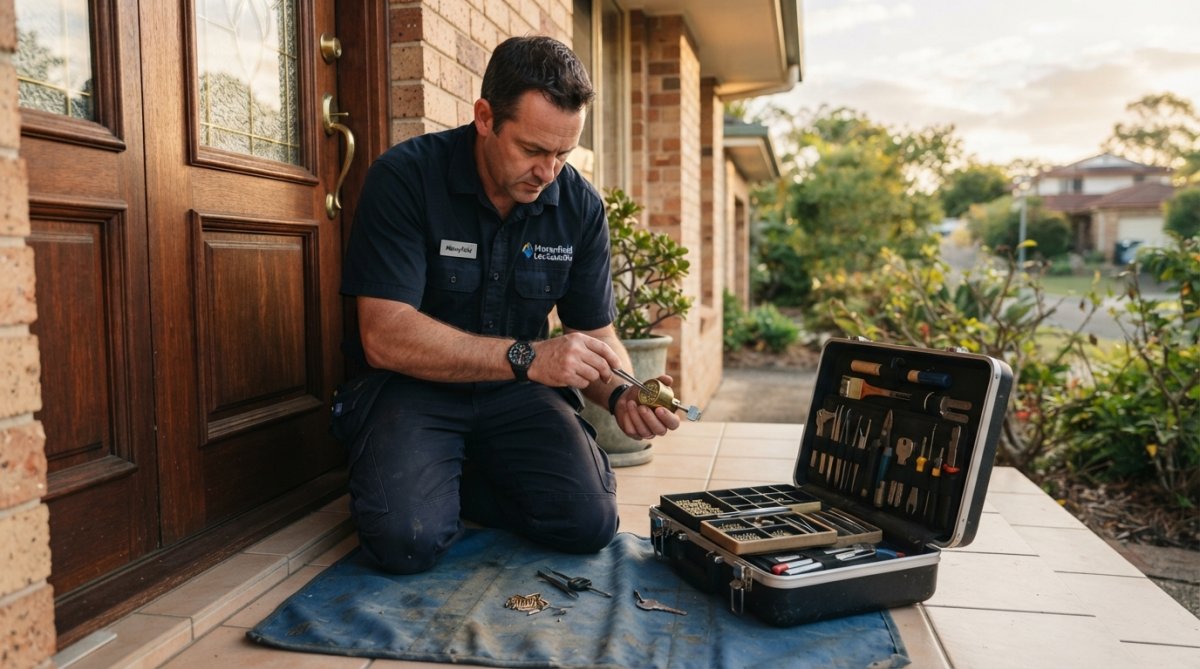
Executing a rekey across several properties requires coordination, not just technical skill. You need to manage the timing between a tenant moving out and the new one moving in, which is often a window of only a few days. The process is straightforward if you follow a structured workflow.
Assess Your Current Lock Hardware
Before booking any service, walk through every unit and catalogue the locks. Note the brand and model of each deadbolt and lockset, the condition of the cylinder, and whether the keys are worn. This assessment determines whether you can rekey or need to replace. If you have a mix of brands, confirm that the cylinders are compatible with standard rekeying kits. This step also helps you decide if you want to move toward a master key system, which is easier to implement when all hardware is uniform.
Choose Between DIY Kits and Professional Locksmith Services
You have two options here, and the right choice depends on your portfolio size and your tolerance for risk. DIY rekeying kits are available, and the parts can cost less than $10 per lock if you perform the labour yourself Balport Lock and Safe on rekeying costs. This is viable for a single unit or a handy landlord with one or two properties. The trade-off is time and the risk of damaging a cylinder if you are not experienced.
For multiple properties, professional services are typically the better investment. Professional rekeying services range from $50 to $150 per lock Vista Management Group’s landlord security guide, but you are paying for speed, accuracy, and the assurance that the job is done correctly the first time. A professional can also key multiple locks alike on site, which eliminates the hassle of managing dozens of different keys.
Coordinate the Rekeying Workflow
The logistics of access are the hardest part. You need the property vacant and accessible, and you need the new tenant’s move-in date locked in. A common approach is to schedule the rekey for the day after the old tenant vacates and the day before the new tenant moves in. This closes the security gap completely. If you are managing this remotely, arrange for the locksmith to meet a property manager on site, or ensure you have a secure way to provide access. After the work is done, verify that all new keys work before the new tenant arrives.
Master Key Systems for Rental Properties
A master key system is the most efficient solution for landlords managing multiple buildings, as it allows one key to open every lock on your portfolio while each tenant retains a unique key that only opens their own unit. This eliminates the need to carry a heavy keyring and simplifies emergency access. If a tenant loses their key, you can let them in with your master key without needing to track down a specific unit key.
But a master key system is not a single product, it is a hierarchy of access that you design, and the design decisions you make at installation determine how secure and manageable the system is for the life of your portfolio.
Understanding the Key Hierarchy
A typical master key system for a rental portfolio has three levels. At the top is the grand master key, which opens every lock across all your properties. Below that are master keys for individual buildings, which open every unit in that building but not units in other buildings. At the bottom are the change keys, the unique keys you issue to each tenant, which open only their specific unit.
This hierarchy matters because it lets you delegate access. A property manager responsible for one building gets that building’s master key, not the grand master. A maintenance contractor who works across your portfolio might get a key that opens common areas only. You can design the system so that each person has exactly the access they need and nothing more.
The Security Trade-Off You Must Understand
Every master key system has an inherent vulnerability: the more levels in the hierarchy, the easier it is for a skilled person to decode the master key from a change key. This is not a theoretical concern, it is a well-documented property of pin-tumbler locks. A locksmith or a determined individual with access to a tenant’s key and basic lockpicking knowledge can potentially derive the master key cuts.
This risk is manageable, but it requires deliberate choices. The first is to use restricted key blanks. These are key blanks that the manufacturer only supplies to authorised locksmiths, and they are protected by patent or design registration. A tenant cannot take their key to a hardware store and get a copy because the blank is not available. This is the single most important control you can implement.
The second choice is to limit the number of master key levels. A simple two-level system, one master key for you, unique keys for tenants, is significantly more secure than a complex multi-level hierarchy. Only add intermediate levels if you genuinely need them for your management structure.
Implementation and Ongoing Management
Implementing a master key system requires all locks to be keyed to a specific schematic, which is a job for a professional locksmith. The upfront cost is higher than standard rekeying, but the operational savings can be significant over time. For property managers handling keying systems for multiple buildings, this is often the difference between a manageable portfolio and a chaotic one.
Once the system is installed, the management burden shifts to record-keeping. You need a key register that tracks every key issued: who holds it, which door it opens, and when it was issued. This register must be updated at every tenant turnover and audited at least annually. When a tenant moves out, you rekey that unit’s cylinder back to the master system, which costs the same as a standard rekey but does not require reconfiguring the entire system.
When you install a master key system, order spare cylinders pre-keyed to the master system. Keep them in a secure cabinet. When a tenant moves out, swap the cylinder in minutes and rekey the old one at your leisure. This reduces the vacancy gap between tenancies from days to hours.
When a Master Key System Is Not the Right Choice
For a landlord with a single four-unit building, a full master key system may be overkill. A simpler approach is to key all units alike, meaning every tenant’s key opens every unit, which is only appropriate for short-term holiday rentals where guests expect shared access. For standard residential leases, keying all units alike is a security risk because tenants can access each other’s units.
A middle-ground option is a single master key without intermediate levels: you have one key that opens every unit, and each tenant has a unique key. This is simpler to manage and more secure than a complex hierarchy. Discuss your portfolio size and management structure with your locksmith before committing to a design. The right system for a two-building portfolio is different from the right system for a twenty-building portfolio, and a good locksmith will walk you through the trade-offs before you spend the money.
Common Mistakes to Avoid When Rekeying Multiple Locks
The most frequent error landlords make is only rekeying the front door while ignoring the back door and the garage entry. If a former tenant has a copy of the back door key, the front door rekey offers no protection. Always rekey every external entry point in the unit at the same time.
Another mistake is failing to track your keys. If you do not know how many master keys exist or who holds them, you have a security gap. Maintain a log of every key issued and returned, and audit this list at each turnover. A third issue is waiting until the new tenant is already moving in to schedule the rekey, which often results in rushed work or a security gap if the locksmith cannot make the tight window.
Finally, do not ignore the condition of the door hardware itself. Rekeying a corroded or failing cylinder is a waste of money. If the lock is near the end of its service life, replace it during the turnover rather than paying for a rekey now and a replacement in six months.
Conclusion: Secure Your Portfolio and Protect Your Liability
Rekeying multiple rental property locks is a recurring operational cost, but it is one of the cheapest forms of liability insurance you can buy. Skipping it to save $100 per turnover exposes you to a claim that could cost thousands in legal fees and lost trust. The workflow is manageable: assess your hardware, decide between DIY and professional help, and coordinate the timing tightly between tenancies. For landlords juggling properties across the region, having a reliable partner who understands keying systems and master key schematics makes the process painless. Morayfield Locksmiths has provided rapid, reliable security solutions to the Moreton Bay community since 1994, including advanced electronic locking systems and restricted keying for commercial properties. Get started with Morayfield Locksmiths and ensure every turnover closes the security gap completely.
Frequently Asked Questions
Is it a legal requirement for landlords to rekey locks between tenancies?
No universal legal mandate requires rekeying between every tenancy in Australia, but state and territory residential tenancy acts require the premises to be reasonably secure. Rekeying between tenancies is the practical way to meet that duty and reduce liability for unauthorised access. Check your state’s specific legislation and your tenancy agreement for clauses about security devices. When in doubt, rekeying is the safer operational choice.
What is the difference between rekeying and replacing a lock cylinder?
Rekeying changes the internal pins of the existing lock cylinder so old keys no longer work, while the hardware stays in place. Replacing the lock cylinder swaps out the entire locking mechanism, often when the hardware is worn or a higher security grade is needed. Rekeying is cost-effective for multiple locks in good condition. Replacement makes sense when the lockset is damaged, key control is a concern, or you are upgrading to smart locks.
Can I rekey multiple locks to use the same master key?
Yes. A master key system lets you key multiple locks alike so one key operates every unit, while each tenant still receives a key that only works for their own lock. This requires a trained locksmith to pin each cylinder with the correct master wafer combinations. For a rental portfolio, this simplifies key management and reduces the number of keys you carry during inspections and maintenance.
How long does the process of rekeying multiple locks take?
A professional locksmith can typically rekey a standard deadbolt in 10 to 20 minutes. For a five-unit property, expect the job to take one to two hours on site. DIY rekeying takes longer per lock, especially your first time, and requires the correct kit for each lock brand. Bulk rekeying is faster when locks are keyed alike, because the locksmith pins each cylinder once and then matches the rest to that key.