Table of Contents
- Why Locksmith Scams Are Surging in 2026
- The 7 Red Flags of a Rogue Locksmith
- How to Verify a Locksmith License and Credentials
- Average Cost of Emergency Locksmith Callout and Hidden Fees
- Emergency Locksmith Response Time Expectations
- How to Vet a Locksmith Before You’re Locked Out
- Your Rights and Post-Scam Recovery Steps
- Conclusion: Choose a Locksmith You Can Trust
- Frequently Asked Questions
Last Updated: September 8, 2026
Why Locksmith Scams Are Surging in 2026
Rogue operator complaints have jumped 136% in the first half of 2026 compared to the same period last year, according to the Master Locksmiths Association complaint data. That surge is not a coincidence. Scammers have moved from flyers in letterboxes to sophisticated digital advertising that makes them look indistinguishable from legitimate local businesses.
The problem is that most homeowners only think about locksmiths during a genuine emergency. You are locked out, it is late, and the pressure to act quickly overrides your better judgment. At Morayfield Locksmiths, we have served the Moreton Bay region since 1994, and we have watched these tactics evolve from simple overcharging to organised fraud designed to exploit that exact moment of vulnerability.
A locksmith scam is any practice where a provider misrepresents their identity, inflates prices after work begins, or performs unnecessary damage to force a higher-cost repair. Understanding how these operators work before you need them is the single most effective way to protect yourself.
The 7 Red Flags of a Rogue Locksmith
Spotting a rogue operator comes down to observing behaviour before and during the job. These seven warning signs consistently appear across scam reports:
- No company name or address provided when you call
- Refusal to give a written estimate over the phone
- Demands for cash-only payment with no receipt
- Unbranded vehicles or no vehicle markings on arrival
- No photo identification or technician name offered
- Vague answers about licensing or trade association membership
- Pressure to act immediately without answering your questions
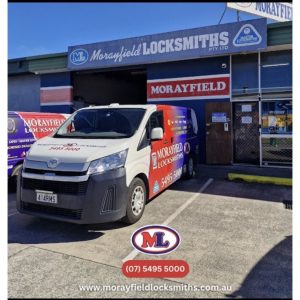
The absence of professional branding on vehicles is a particularly strong indicator. Legitimate operators invest in marked vehicles because repeat and referral work depends on recognisability, as noted by Angi’s guidance on verifying locksmith legitimacy. A technician who cannot tell you their company name before they start drilling is not someone you want working on your lock hardware.
The ‘Driller Killer’ Bait-and-Switch Tactic
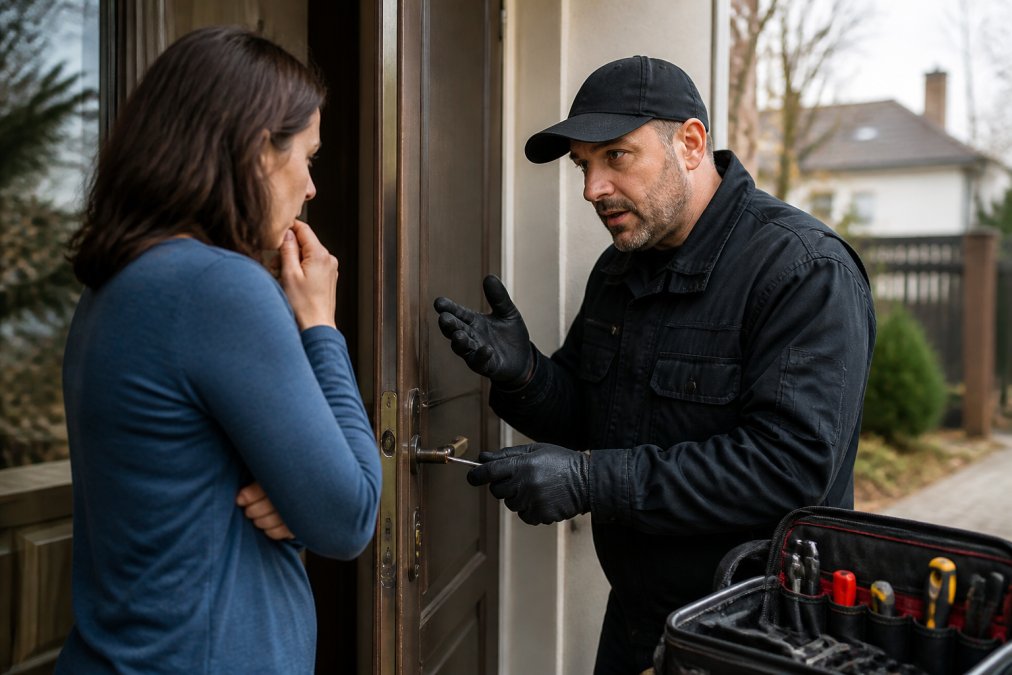
One tactic deserves special attention because it causes the most property damage. The “Driller Killer” approach, documented by The Guardian’s investigation into rogue locksmiths, involves operators who arrive, ask no diagnostic questions, and immediately drill through your existing lock.
Drilling is sometimes necessary, but only after the technician has assessed the lock and confirmed non-destructive entry is impossible. When a technician goes straight for the drill, they are forcing a high-cost replacement that inflates the final invoice, sometimes by up to 10 times the original quote. A legitimate locksmith will always try picking or bypass techniques first.
If a technician reaches for a drill within the first minute of arriving without asking how the lock operates or whether you have a spare key elsewhere, stop the job immediately. You are about to be charged for a replacement you may not need.
How to Verify a Locksmith License and Credentials
Verifying credentials is straightforward when you know what to ask. Every state and territory in Australia has its own licensing requirements for locksmiths, so the first step is confirming the technician holds a valid licence for your jurisdiction.
Ask for their full business name and licence number during the initial call. A legitimate operator will provide these without hesitation. Cross-check the details against your state’s licensing registry or consumer protection website before authorising any work. Professional certification through a trade association such as the Master Locksmiths Association adds another layer of verification, as membership requires adherence to a code of conduct.
A common mistake is confusing a general handyman who offers lock services with a licensed locksmith. Locksmithing requires specific training in lock mechanisms, security systems, and safe opening techniques. If the person cannot demonstrate that training through a licence number, they are not qualified to work on your security hardware.
Average Cost of Emergency Locksmith Callout and Hidden Fees
The average cost of an emergency locksmith callout varies significantly based on your location, the time of day, and the type of lock involved. Rather than quoting a single figure, understand that pricing should be transparent and quoted upfront.
Legitimate locksmiths provide a written estimate before any work begins. That estimate should itemise the callout fee, labour, and any parts required. Scammers operate differently: they quote a low bait price to secure the job, then inflate the invoice once the work is done, claiming “unexpected complications” or “specialist equipment required.”
Ask three specific questions before approving any work:
- What is the total cost including callout and labour?
- Are there additional fees for after-hours service?
- Will you provide a written itemised invoice?
If a provider refuses to confirm pricing in writing before starting work, end the call. Transparent pricing is the baseline standard for legitimate locksmiths, not a bonus feature.
Emergency Locksmith Response Time Expectations
Emergency locksmith response time expectations depend heavily on where you are located. In metropolitan areas, a 30 to 45 minute response is typical. In regional and semi-rural areas like Moreton Bay, allow 45 to 60 minutes for a genuine emergency call-out.
Response time claims are a favourite tool of scammers. Rogue operators advertise “15 minute arrival” to win the job, then dispatch a technician who arrives an hour later or fails to show entirely. Legitimate providers give realistic timeframes based on their current dispatch load and actual travel distance.
When you call, ask what their current response time is, not what their advertised response time is. A provider with a physical local presence and a real dispatch team can tell you where the nearest technician is. One operating through a call centre cannot.
How to Vet a Locksmith Before You’re Locked Out
The best time to find a locksmith is when you do not need one. Emergency vetting is reactive and stressful; proactive vetting lets you verify credentials calmly.
Start by asking neighbours and local community groups for recommendations. Word-of-mouth referrals carry weight because they come from people with direct experience. Then confirm the provider has a physical business address in your area, not just a mobile number and a website.
A legitimate locksmith should be able to discuss your lock types, security concerns, and provide advice on upgrades without pushing unnecessary work. This consultation is also your opportunity to confirm they service your specific needs, whether that is residential, commercial, or automotive.
Digital Footprint and Online Advertising
A provider’s digital presence tells you a lot about their legitimacy. Check whether they have a real website with a physical address, a local phone number, and consistent branding across their online profiles.
Scammers exploit digital advertising platforms with low-cost bait ads designed to attract victims. These ads often feature generic stock photos, no business address, and phone numbers that route to call centres rather than local technicians. Cross-reference the business name against complaint databases and local business directories before calling.
Another emerging concern is AI-generated content used to fabricate fake reviews and testimonials. Look for review patterns that seem repetitive or overly generic. Real customer feedback contains specific details about the service experience, not just “great service, highly recommend” repeated across dozens of posts.
Your Rights and Post-Scam Recovery Steps
If you believe you have been scammed, acting quickly improves your chances of recovery. Your first step is to stop further work and refuse payment for unauthorised charges. You are not obligated to pay for services you did not approve.
Document everything: the original quote, the final invoice, photos of any damage, and the technician’s details if you have them. Then report the incident to your state or territory’s consumer protection agency. In Australia, each state has its own body responsible for handling consumer complaints and unfair trading practices.
You should also report the incident to the platform where you found the provider, whether that was Google, Facebook, or a local directory. Platforms have processes for removing fraudulent businesses, and your report protects other consumers from the same experience.
Do not confront a suspected scammer alone. If you feel threatened or the situation escalates, contact local police. Your safety matters more than recovering a few hundred dollars.
Conclusion: Choose a Locksmith You Can Trust
Avoiding locksmith scams in 2026 comes down to preparation. Verify credentials before you need them, demand written estimates, and trust your instincts when something feels wrong. The tactics used by rogue operators rely on urgency and confusion; removing those conditions removes their advantage.
Morayfield Locksmiths has provided honest, upfront pricing and reliable emergency assistance across the Moreton Bay region since 1994. Our technicians arrive in branded vehicles with photo identification, and our 24-hour availability means you are never left waiting when you need help most. When you choose a locksmith with a verifiable local presence and a track record of community trust, you protect more than your locks, you protect your peace of mind.
Call Morayfield Locksmiths today for transparent pricing and rapid response from a team you can verify.
Frequently Asked Questions
How do I know if a locksmith is legitimate?
A legitimate locksmith will answer with a company name, arrive in a branded vehicle, and show photo identification. Ask for their licence and call the business to confirm they are a real employee. Check for a physical business address and look for their presence in a local business directory. Be very cautious of call centres that dispatch unmarked cars, as this is a hallmark of rogue operators.
What should I do if I suspect I’ve been overcharged by a locksmith?
First, ask for an itemised invoice. If you suspect fraudulent activity or price gouging, do not pay more than the agreed written quote. Report the incident to your state’s consumer protection agency and the Australian Competition and Consumer Commission. Contact your bank about disputing the charge. Document everything, including the technician’s name, the vehicle registration, and the invoice.
What does a fair and transparent locksmith quote look like?
A transparent quote includes a breakdown of the service fee, labour, and the cost of any new lock hardware. It should be provided in writing before any work begins. Be wary of quotes given over the phone without asking about your lock type. The final invoice should not exceed the quote without your prior approval for extra parts or work.
Are there government resources for reporting rogue locksmiths?
Yes. You can report a rogue locksmith to your state or territory’s fair trading office, which handles complaints about businesses. For matters involving false advertising or misleading conduct, you can also contact the Australian Competition and Consumer Commission. These bodies can investigate and take action against businesses that breach Australian Consumer Law.