Table of Contents
- What Commercial Locksmith Services Actually Cover
- Factors That Influence Commercial Locksmith Services Pricing
- Emergency Commercial Locksmith Rates and Call-Out Fees
- Commercial Lock Installation Cost by Service Type
- Master Key System Pricing: What Drives the Cost
- Rekeying, Key Cutting, and Broken Key Extraction Costs
- Maintenance Contracts, Compliance, and What to Look for in a Quote
- Frequently Asked Questions
Last Updated: August 30, 2026
What Commercial Locksmith Services Actually Cover
Commercial locksmith services cover a significantly broader scope than most business owners expect. According to Decisions Advisors & Consulting’s 2026 Australia Security Market report, the Australian security market was valued at AUD 11.82 billion in 2026, reflecting serious organisational investment in physical security infrastructure. At Morayfield Locksmiths, we’ve worked with business owners across the Moreton Bay region since 1994, and the question we hear most often is: what’s this actually going to cost me?
Commercial locksmith services covers all professional lock, key, and access security work on commercial properties, from straightforward lockout response to building-wide master key systems or electronic access control networks. The scope determines pricing: a single-door lockout and a 50-door master key system are both commercial locksmith work but sit at completely different cost levels.
Standard Business Hours vs. After-Hours Service
The most significant pricing variable is timing. Work during standard business hours (Monday to Friday, 7am-5pm) attracts base rates. After-hours service, including evenings, weekends, and public holidays, carries surcharges of 25-50% or more.
For businesses, this creates a genuine decision point. Waiting until Monday morning for non-urgent lock repair almost always costs less than calling a 24-hour emergency locksmith on Saturday night. For genuine emergencies, the surcharge is unavoidable, but for planned maintenance, scheduling during business hours is the smarter financial choice.
If you manage multiple commercial premises, scheduling all non-urgent rekeying, lock maintenance, and hardware upgrades in a single visit during business hours can significantly reduce your total service call costs.
Factors That Influence Commercial Locksmith Services Pricing
Commercial locksmith pricing is quoted job-by-job because variables are too significant to standardise.
Labour Costs, Travel Time, and On-Site Assessment
Labour is the core cost driver. Hourly rates in 2026 typically range between $85 and $175 for standard work during business hours, with specialised or emergency work pushing rates higher, according to TheKeyBot’s State of the Locksmith Industry 2026 report. Travel time is usually factored into the call-out fee or charged separately as a service attendance cost.
On-site assessment adds time and cost to complex jobs. A locksmith quoting a master key system or access control installation cannot give an accurate figure without physically inspecting the premises. Expect an assessment visit for any job involving more than five doors or electronic system integration.
Key labour cost factors include:
- Number of doors or cylinders involved
- Time required for on-site assessment and system design
- Distance travelled to the site
- Complexity of existing lock mechanisms
Security Hardware Grade and Lock Mechanism Complexity
Hardware grade is the second major cost driver. A standard commercial deadbolt costs far less than a high-security cylinder from a restricted keyway system. High-security locks like Medeco, Mul-T-Lock, or Schlage Primus use patent-protected keyways, hardened steel construction, and anti-pick pin configurations that require significantly more skill and expensive components.
For commercial properties, lock mechanism complexity also affects labour time. Older mortice locks, multi-point locking systems, and heavy-duty door closers all take longer to service than standard pin tumbler deadbolts. Choose hardware grade based on your risk profile: a small retail tenancy has different requirements than a medical facility or data centre.
Emergency Commercial Locksmith Rates and Call-Out Fees
Emergency commercial locksmith rates are the most variable pricing category. A commercial lockout, where staff cannot access the premises, is the most common emergency call. Costs depend on time of day, lock type, and entry method.
Commercial property lockout services in 2026 range from $100 to $400 or more, based on the Complete Price Guide to Locksmith Costs 2026. A simple pin tumbler deadbolt opened during business hours sits at the lower end; a high-security multi-point lock opened at 2am on a public holiday sits at the upper end.
The call-out fee covers the locksmith’s travel and availability. This is charged regardless of job duration and is non-negotiable for emergency after-hours service.
Be cautious of any emergency locksmith quoting an unusually low call-out fee over the phone. A common industry problem involves operators advertising $49 call-outs and then citing lock complexity to justify bills of $400 or more on arrival. Legitimate providers give transparent, upfront quotes before any work begins.
After-hours surcharges apply from approximately 5pm weekdays and all day on weekends. Public holiday rates are the highest tier. Broken key extraction and lock damage during entry are charged separately from the call-out fee.
Commercial Lock Installation Cost by Service Type
Commercial lock installation costs vary more than any other category. Job scope can range from replacing a single deadbolt to fitting an entire multi-storey office building with high-security hardware.
Overall commercial lock installation costs in 2026 range between $218 and $843 per lock, averaging around $392, according to Homeyou’s 2026 locksmith cost report.

Deadbolt Installation and Lock Replacement
Deadbolt installation is the most common commercial lock installation job. Commercial-grade deadbolts are heavier than residential equivalents, with higher-grade steel and more complex internal mechanisms. Installation time increases when existing hardware needs removal, door frame modification, or keying to match an existing system.
Lock replacement follows the same logic. Replacing a like-for-like lock is straightforward. Upgrading to high-security cylinders or switching from keyed systems to keypad entry requires additional labour for fitting and programming.
Electronic Access Control and High-Security Locks
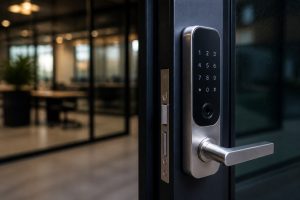
Electronic access control is where commercial locksmith pricing increases significantly. Installing access control on a single commercial door in 2026 costs between $1,495 and $4,995, depending on system type and integration requirements.
The cost breakdown typically includes:
- The control unit and reader hardware
- Electric strike or magnetic lock installation
- Wiring and power supply
- Programming and user setup
- Integration with existing alarm or CCTV systems
High-security lock rekeying for cylinders from Medeco, Mul-T-Lock, and Schlage Primus is estimated at $85 to $220 per cylinder in 2026.
The smart lock segment is growing fast. According to Statista’s Australian smart lock industry data via LSC Complete Security Solutions, the Australian smart lock industry revenue is increasing by an estimated 7.71% year on year, with 15.2% of all Australian households projected to have a smart lock by 2029.
Master Key System Pricing: What Drives the Cost
Master key system pricing is often misunderstood. The cost reflects the complexity of the hierarchy being designed, the grade of hardware selected, and the documentation and security management that comes with a properly implemented restricted keyway system.
Designing a master key system for a commercial property in 2026 ranges from $495 to $2,495 or more, depending on scope.
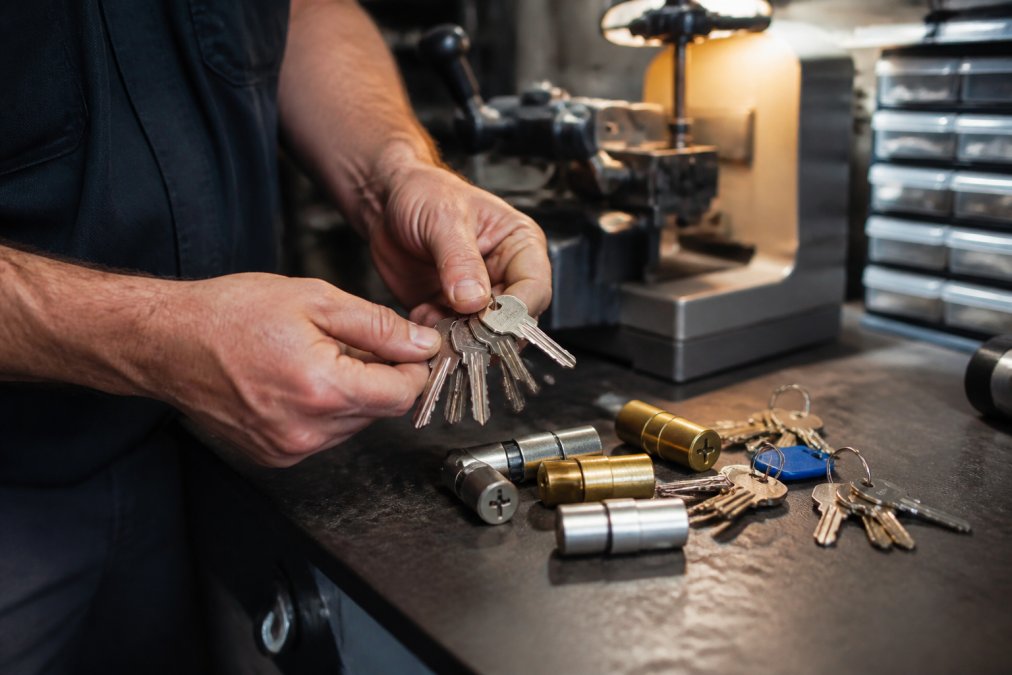
The four factors that drive master key system cost are:
- Number of locks and cylinders, more doors means more hardware, more keying time, and more complexity
- Number of master levels, a simple grand master / master / change key structure costs less than a four-level hierarchy
- Restricted keyway selection, patent-protected keyways prevent unauthorised key duplication and add to hardware and management costs
- Documentation and key register, a properly managed system includes a key register, issue records, and a clear policy for lost or stolen keys
The ongoing cost of a master key system is often higher than initial installation. Every time a key is lost or a staff member leaves, the security decision is whether to rekey affected locks or accept the risk. Building that cost into your planning from the start is the smarter approach.
Rekeying, Key Cutting, and Broken Key Extraction Costs
Rekeying is often the most cost-effective security upgrade available to a commercial property. Rather than replacing the entire lock, a locksmith reconfigures the internal pins so old keys no longer work and new keys are cut to the updated configuration.
Commercial rekeying in 2026 is estimated at $95 to $195 for the first door, with additional doors typically costing $45 to $65 each. For a property changing tenants or following staff departure, rekeying multiple doors in a single visit is significantly cheaper than lock replacement.
Key cutting and duplication pricing depends on key type. Standard commercial keys are straightforward. Restricted or high-security keys require authorisation checks and specialist equipment. Key duplication for restricted keyway systems is intentionally limited to authorised locksmiths holding the relevant licence.
Broken key extraction cost depends on how far the broken key has lodged in the cylinder and whether the lock can be saved. In many commercial cases, extraction is followed by rekeying to ensure the cylinder hasn’t been damaged.
Rekeying is almost always cheaper than lock replacement and provides equivalent security when the lock hardware itself is in good condition. For commercial properties with multiple tenants or high staff turnover, a scheduled rekeying programme is more economical than reactive lock replacement.
Maintenance Contracts, Compliance, and What to Look for in a Quote
Maintenance contracts are the pricing category most commercial operators overlook until something goes wrong. A scheduled maintenance agreement covers periodic inspection of lock mechanisms, lubrication, adjustment of door hardware, and testing of electronic access control systems.
The value of a maintenance contract is predictability. Rather than paying emergency rates when a lock fails mid-business-day, a maintenance programme catches wear before it becomes a lockout. For properties with high-traffic doors, heavy-duty hardware, or electronic systems, this is prudent risk management.
Pricing for maintenance contracts varies based on door count, visit frequency, and scope. Always request an itemised quote specifying what is and isn’t covered.
Locksmith Licensing and Insurance Requirements
In Queensland, locksmiths are required to hold a Security Equipment Installer Licence issued under the Security Providers Act 1993 and administered by the Queensland Government. Any commercial locksmith operating without a current licence is operating illegally. Before engaging any provider, verify their licence is current.
Insurance is equally important. A licensed commercial locksmith should carry public liability insurance and, where relevant, professional indemnity cover. For commercial clients, this matters because any damage to property during a service call or any security failure traceable to incorrect installation needs to be covered.
When reviewing a quote for commercial locksmith services, look for:
- Licence number clearly stated on the quote or invoice
- GST-inclusive pricing itemised by service type
- Explicit call-out fee and after-hours surcharge rates
- Hardware specified by brand and grade, not generic description
- Labour rate and estimated time stated separately from hardware costs
- Warranty terms for both hardware and workmanship
Any quote that refuses to itemise costs before work begins is a warning sign. Morayfield Locksmiths has operated on honest, upfront pricing since 1994. Customers like Tim Whitehead have noted the experience directly: “Great customer service. Made everything easy. Knowledgeable and friendly.”
| Service Type | Typical Scope | Key Cost Drivers |
|---|---|---|
| Commercial lockout | Single door, gain entry | Time of day, lock type, access method |
| Rekeying | Per cylinder | Number of doors, key schedule complexity |
| Deadbolt installation | Per door | Hardware grade, door preparation required |
| Electronic access control | Per door | System type, wiring, integration |
| Master key system | Full property | Number of levels, keyway, documentation |
| Broken key extraction | Per cylinder | Key depth, cylinder condition |
| Maintenance contract | Ongoing | Door count, visit frequency, scope |
Commercial security is not an area where vague pricing and unclear scope serve anyone well. The cost of getting it wrong, whether a lockout at 3am from a poorly installed lock or a security breach from mismanaged master keys, is always higher than the cost of doing it right the first time. Morayfield Locksmiths provides 24-hour availability, rapid response times, and upfront pricing across the full range of commercial locksmith services. Contact us for a transparent, itemised quote before any work begins.
=== FAQ ANSWERS (audit these too, same rules) ===
[1] Q: Are commercial locksmith rates different from residential rates?
A: Yes. Commercial jobs typically cost more than residential work for several reasons: commercial-grade hardware is more expensive, the scope of work is often larger (multiple doors, master key levels, or access control wiring), and after-hours call-out fees apply when a business is locked out outside standard trading hours. Rekeying a single office door differs significantly in price from setting up a 50-door master key system. Always request a GST-inclusive quote that itemises labour costs, hardware, and any after-hours surcharge separately.
[2] Q: What should be included in a commercial locksmith quote?
A: A thorough commercial locksmith quote should clearly list the call-out fee or service attendance charge, hourly labour rate, cost of security hardware (locks, cylinders, electronic access control panels), any after-hours or public holiday surcharge, and GST. For larger jobs such as master key system design or electronic access control installation, the quote should also detail the number of doors, key levels, and any on-site assessment fee. Transparent, upfront pricing protects you from unexpected charges when the locksmith arrives on site.
[3] Q: How do locksmiths calculate labour and after-hours costs?
A: Most mobile locksmiths charge a base call-out fee to cover travel time and the first portion of labour, then an hourly rate for time spent on site. After-hours surcharges apply outside standard business hours, with higher rates on weekends and public holidays. According to 2026 industry data, standard commercial hourly rates typically sit between $85 and $175, rising to $150-$300 for emergency or after-hours requests. Complex jobs involving high-security locks or electronic access control sit at the upper end of that range. Contact your locksmith directly for a firm GST-inclusive quote.
[4] Q: How much does it cost to set up a master key system for a commercial property?
A: Master key system pricing varies considerably based on the number of doors, the number of key levels (grand master, master, sub-master, change keys), and whether a restricted keyway is selected. A 2026 industry pricing guide estimates commercial master key system design at $495-$2,495 or more for complex multi-level systems. Simpler setups covering a handful of doors cost less, while large facilities with documented key registers and restricted cylinders sit at the higher end. Request an on-site assessment for an accurate GST-inclusive quote.
Frequently Asked Questions
Q: Are commercial locksmith rates different from residential rates?
A: Yes. Commercial jobs typically cost more than residential work for several reasons: commercial-grade hardware is more expensive, the scope of work is often larger (multiple doors, master key levels, or access control wiring), and after-hours call-out fees apply when a business is locked out outside standard trading hours. Rekeying a single office door differs significantly in price from setting up a 50-door master key system. Always request a GST-inclusive quote that itemises labour costs, hardware, and any after-hours surcharge separately.
Q: What should be included in a commercial locksmith quote?
A: A thorough commercial locksmith quote should clearly list the call-out fee or service attendance charge, hourly labour rate, cost of security hardware (locks, cylinders, electronic access control panels), any after-hours or public holiday surcharge, and GST. For larger jobs such as master key system design or electronic access control installation, the quote should also detail the number of doors, key levels, and any on-site assessment fee. Transparent, upfront pricing protects you from unexpected charges when the locksmith arrives on site.
Q: How do locksmiths calculate labour and after-hours costs?
A: Most mobile locksmiths charge a base call-out fee to cover travel time and the first portion of labour, then an hourly rate for time spent on site. After-hours surcharges apply outside standard business hours, with higher rates on weekends and public holidays. According to 2026 industry data, standard commercial hourly rates typically sit between $85 and $175, rising to $150-$300 for emergency or after-hours requests. Complex jobs involving high-security locks or electronic access control sit at the upper end of that range. Contact your locksmith directly for a firm GST-inclusive quote.
Q: How much does it cost to set up a master key system for a commercial property?
A: Master key system pricing varies considerably based on the number of doors, the number of key levels (grand master, master, sub-master, change keys), and whether a restricted keyway is selected. A 2026 industry pricing guide estimates commercial master key system design at $495-$2,495 or more for complex multi-level systems. Simpler setups covering a handful of doors cost less, while large facilities with documented key registers and restricted cylinders sit at the higher end. Request an on-site assessment for an accurate GST-inclusive quote.