Table of Contents
- Why Professional Locksmith Services Beat DIY and Unverified Operators
- Licensed Locksmith Requirements in Australia: What to Check Before You Call
- Emergency Locksmith Services Cost: What Drives the Price and How to Avoid Hidden Fees
- Automotive Locksmith vs Dealership: Which One Gets You Back on the Road Faster?
- Non-Destructive Entry and Preventing Property Damage During a Lockout
- Digital Security Integration: Smart Locks, Access Control and Post-Service Maintenance
- Insurance, Liability and Workmanship Warranty: The Protection You Only Get From a Professional
- Frequently Asked Questions
Last Updated: September 23, 2026
Why Professional Locksmith Services Beat DIY and Unverified Operators
According to AgentZap’s 2026 locksmith phone statistics, 67% of locksmith service calls happen after standard business hours. That single number explains why why choose professional locksmith services is a question worth answering carefully: most lockouts arrive at the worst possible time, and the person you call at 11pm matters. At Morayfield Locksmiths, we have handled these calls since 1994, and the pattern is always the same. The households that fare best are the ones who chose a licensed professional before they needed one.
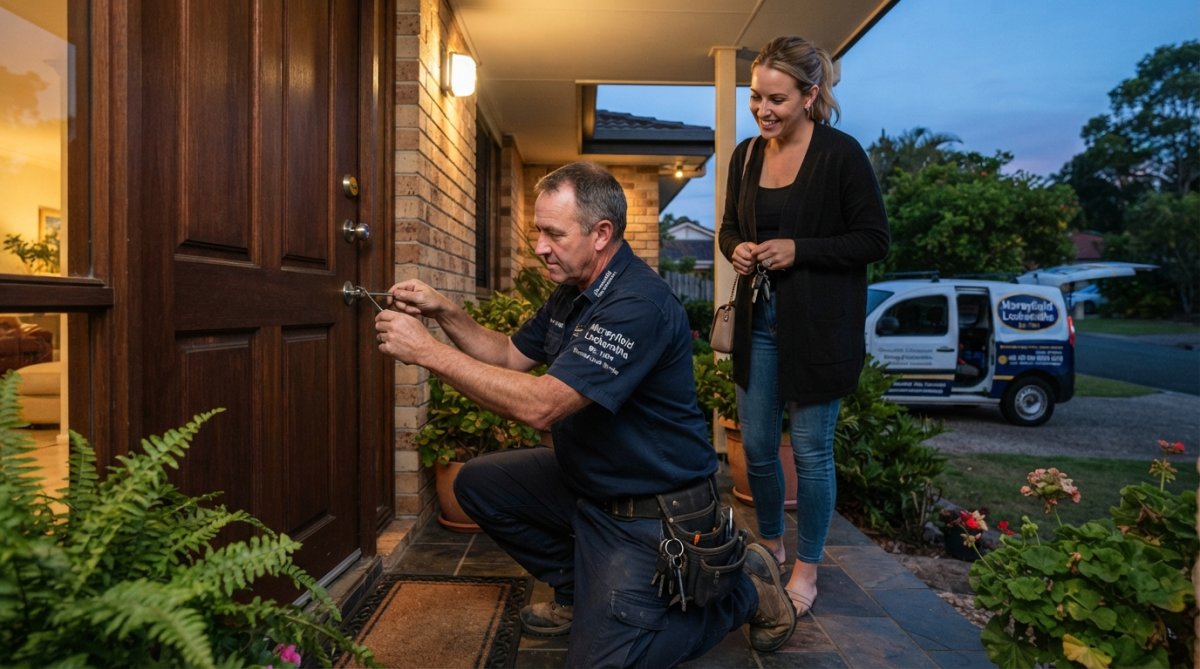
A professional locksmith is a trained, licensed technician who opens, repairs and installs locks and security hardware using non-destructive methods and accountable business practices. The difference between that and a stranger with a pick set is not marketing. It is your door, your insurance and your legal recourse.
The Real Cost of a Cheap, Unverified Technician
The cheapest quote is rarely the cheapest outcome. Industry analysis from AgentZap’s 2026 financial impact data puts the cost of a single missed emergency call at $185 or more, and that is before damage. Unverified operators can drill through a working lock, charge call-out fees that appear only on the invoice, or copy your keys for later use. The Department of Consumer Affairs has flagged exactly these risks: damaged locks, inflated fees and compromised home security when sensitive information reaches third parties.
Licensed Locksmith Requirements in Australia: What to Check Before You Call
Licensing is not uniform across the country, and that catches people out. Locksmith work sits inside security industry regulation in most states and territories, which means the individual technician, not just the business, generally needs a security licence, a police check, or both before they can legally perform lock work. A company ABN is not a substitute for a technician licence, and a technician licence is not a substitute for insurance.
Your Five-Point Credential Verification Checklist
Run this before you confirm a booking:
- Ask for the technician’s full name and licence number, not just the business name
- Search that number on your state or territory security licensing regulator’s public register
- Confirm the licence class covers the work you need, locksmith, security technician and access control can be separate classes
- Confirm the business has a physical address and an active ABN via the Australian Business Register
- Request the call-out fee, hourly rate and parts policy in writing before work starts
- Ask for a certificate of currency for public liability insurance and the stated workmanship warranty period
Any provider who hesitates on any point is a provider you should not invite to your property.
A licence number that returns no result on the public register, or a name that does not match the person at your door, is a stop signal. Do not let the work proceed while you “sort it out later”, by then the lock is already open.
What Changes When the Technician Is Licensed
A licensed technician operates under a regulatory framework that gives you a complaints pathway if something goes wrong. That matters because lock work touches your insurance, your tenancy obligations and, in commercial settings, your compliance with workplace and building requirements. If a job goes badly, an unlicensed operator leaves you with a damaged door and no regulator to escalate to.
Save the licence number and insurer details in your property file the first time you use a locksmith. It takes thirty seconds and it is the first thing an insurer or body corporate will ask for if a claim arises.
Emergency Locksmith Services Cost: What Drives the Price and How to Avoid Hidden Fees
Emergency locksmith services cost more than scheduled work, and the reasons are straightforward: after-hours labour, travel, urgency and the equipment required for non-destructive entry. A fair quote names the call-out fee, the labour rate and any parts separately, before the van arrives.
| Cost Driver | What It Covers | How to Keep It Fair |
|---|---|---|
| Call-out fee | Travel and after-hours availability | Ask for the figure in writing |
| Labour rate | Time on site | Confirm the hourly rate upfront |
| Parts | Locks, cylinders, keys | Request a quote before fitting |
| Access difficulty | High-security or damaged locks | Ask for a non-destructive first attempt |
Automotive Locksmith vs Dealership: Which One Gets You Back on the Road Faster?
For most lockouts and key replacements, an automotive locksmith is faster and less disruptive than a dealership. Dealerships typically require the vehicle to be towed in and booked into a service queue, while a mobile automotive locksmith comes to your location and programs most modern transponder keys on site.
- No towing cost or waiting for a service slot
- On-site key cutting and programming
- Faster turnaround for standard lockouts
- One point of contact for the whole job
Non-Destructive Entry and Preventing Property Damage During a Lockout
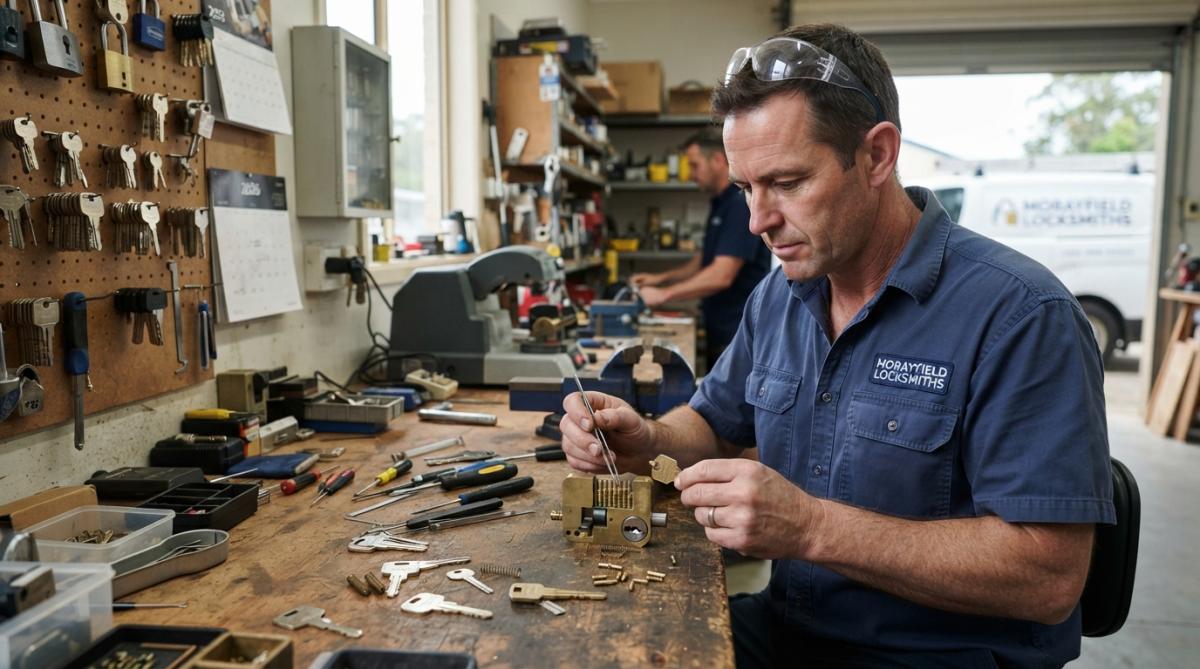
Non-destructive entry is the practice of opening a locked door without drilling, cutting or otherwise damaging the lock or the door itself. A trained technician uses picking, shimming or bypass techniques suited to the specific lock mechanism, then leaves your hardware working exactly as it did before.
Allowing an unverified operator to drill your lock routinely means replacing the cylinder, and sometimes the door furniture, at your own cost. Ask any technician to attempt non-destructive entry first and to explain why if they cannot.
Digital Security Integration: Smart Locks, Access Control and Post-Service Maintenance
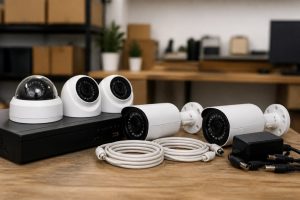
Ask for a security audit before you buy anything new. A short assessment of existing locks, access points and camera coverage usually reveals that one or two targeted upgrades deliver more than a full replacement.
Post-service maintenance is the piece most providers skip. Locks need periodic lubrication, smart lock firmware needs updating, and access credentials need auditing when tenants or staff change. A workmanship warranty is only meaningful if the provider is still around to honour it.
Insurance, Liability and Workmanship Warranty: The Protection You Only Get From a Professional
Insurance and liability coverage is where the gap between a licensed professional and an unverified operator becomes financial, and it is the area most “why choose a professional” articles skip entirely. A properly insured locksmith carries public liability cover, which responds if the technician damages your property, a cracked door frame, a scratched panel, a broken window, during the job.
The Three Layers of Protection to Ask About
- Public liability insurance. Covers third-party property damage and injury on your premises. Ask for a certificate of currency, not a verbal assurance. A certificate names the insurer, the policy number and the expiry date.
- Professional indemnity or workmanship cover. Covers defective work, a deadbolt that fails to latch, a smart lock that drops its connection, a master key system that does not key correctly. This is the layer that pays to fix the job itself.
- Workmanship warranty. A stated period during which the provider will return and remedy defects at no charge. Ask for it in writing on the invoice, with the start date and the exclusions.
Why the Consumer Guarantees Still Apply
Even where a provider’s own warranty is thin, Australian Consumer Law gives you non-excludable guarantees that services will be delivered with due care and skill and will be fit for the purpose you made known. These guarantees sit alongside, not instead of, a workmanship warranty, and they cannot be contracted away. If a lock installation fails because it was done poorly, the guarantee applies regardless of what the provider’s terms say.
The combination that protects you is: a licensed technician, a certificate of currency for public liability, a stated workmanship warranty, and a written invoice that records the work performed. Miss any one and you are carrying the risk yourself.
Record-Keeping That Pays Off at Claim Time
Licensed technicians document what they did, lock model, cylinder type, keying details, date and technician name. That record matters in three situations: an insurance claim, a warranty call-back, and a tenancy dispute over who changed the locks. Ask for the invoice to list the hardware fitted and the warranty period, and keep it with your property documents.
Frequently Asked Questions
How can I verify if a locksmith is qualified in Australia?
Ask for their licence number and check it against your state’s security licensing register before they arrive. A qualified professional locksmith should also carry public liability insurance, provide a written quote upfront, and use a marked vehicle with business details. In Queensland, locksmiths must hold a current security provider licence. If they hesitate to share credentials or pressure you for cash-only payment, walk away and call someone else.
Why do locksmiths charge more for after-hours emergency call-outs?
About 67% of locksmith service calls happen after standard business hours, according to AgentZap’s 2026 industry data. After-hours work means paying a technician to be on standby overnight, plus travel and higher operational costs. A legitimate provider will quote the call-out fee and hourly rate before dispatch. If the final invoice is double the quote, that is a red flag for an unverified operator. Always confirm the total before agreeing to the job.
Is it safer to use a professional locksmith for automotive keys than a dealership?
For most modern vehicles, a professional automotive locksmith can cut and program replacement keys on-site using the same diagnostic equipment a dealership uses, often at a lower cost and without towing your car. Dealerships may need your vehicle booked in for days. A licensed locksmith verifies your ownership documents before programming, which protects you from key theft. For complex immobiliser systems, confirm the locksmith carries the right programming tools for your make and model.
What are the risks of hiring an unlicensed locksmith for home security?
Unlicensed operators may damage locks beyond repair, charge exorbitant fees once you are locked out, or copy your keys and share your address with third parties. The Department of Consumer Affairs (2026) warns that unscrupulous technicians can compromise your home security long after the job is done. A licensed professional locksmith provides a workmanship warranty, uses non-destructive entry methods where possible, and leaves you with documented proof of the work carried out.