Last Updated: November 20, 2026
Quick Summary
Keyless entry lets you open a door by keypad, PIN code, keycard or smartphone app instead of a physical key, so there are no keys to lose, copy or rekey. It also gives you full control over who gets in and when, with access logs and temporary codes for trades, visitors and cleaners.
- A National Apartment Association survey found only 28% of respondents believed smart locks were safer than traditional locks.
- Locksmiths in Queensland need a security provider licence, which you can check through the Office of Fair Trading register.
- Keep a mechanical key override on at least one door as a backup for when a battery dies.
- A Wi-Fi lock loses remote features when the internet drops, though the keypad usually still works on its own batteries.
- Test the mechanical override every few months and replace batteries on a schedule, not just on warning.
Table of Contents
- Why Keyless Entry Is Worth Considering for Your Home
- The Everyday Convenience of Digital Door Locks
- Are Digital Door Locks Safe? What Queensland Homeowners Should Know
- Keyless Entry for Rental Properties: Access Without the Key Handover
- Temporary Access Codes for Smart Locks: Trades, Visitors and Cleaners
- Keyless Lock Battery Backup, Power and Connectivity
- What to Weigh Up Before You Buy
- Book a Keyless Entry Assessment for Your Property
- Frequently Asked Questions
Why Keyless Entry Is Worth Considering for Your Home
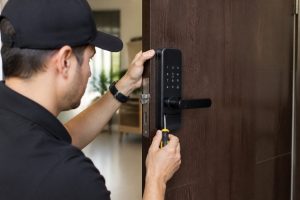
Keyless entry is a locking system that opens a door through a keypad, PIN code, keycard or smartphone app instead of a physical key.
Below, we break down seven benefits of keyless entry for residential properties, plus the honest drawbacks most guides skip.
The evidence on safety is more mixed than the marketing suggests. A National Apartment Association survey found that only 28% of respondents believed smart locks were safer than traditional locks, according to the NAA’s analysis of smart locks versus metal keys. That gap between perception and reality is exactly what this guide addresses.
The Everyday Convenience of Digital Door Locks
The biggest daily win is simple: you stop hunting for keys. A digital door lock lets you arrive with full hands, tap a PIN, and walk in. No fumbling on the doorstep in the rain.
No More Lost, Stolen or Copied Keys
A lost key is a security problem, not just an inconvenience. With a keypad lock, there is no key to copy and no lock to rekey after a breakup, a lost bag or a tradesperson who kept a spare. You delete the code and the access is gone.
Entry Methods: Keypad, PIN, Keycard and Smartphone
Most residential systems offer several ways in:
- PIN code for family and regular visitors
- Keycard or fob for households that prefer a physical token
- Smartphone app for remote unlocking and access logs
- Mechanical key override as a backup
We recommend keeping a keyed override on at least one door. It costs nothing to have and saves a lockout when a battery dies.
Are Digital Door Locks Safe? What Queensland Homeowners Should Know
Digital door locks are safe when they are properly specified, installed by a licensed tradesperson and set up correctly. The weak point is rarely the keypad, it is the lock body, the door and frame, and the way the system is configured. A cheap electronic deadbolt on a hollow-core door is less secure than a quality mechanical deadbolt on a solid door, regardless of how many digits the PIN has.
Licensing and who should install it
Locksmiths in Queensland need to hold a security provider licence (Apply for a security equipment installer licence). You can check any licence through the Queensland Office of Fair Trading licence register. A licensed installer should confirm your door and frame can carry the hardware and check that the lock is fitted so the bolt actually engages.
Australian Standards and insurer expectations
There is no single Australian Standard that says “keyless locks are compliant”. What matters is whether the specific product and installation suit the door and the property, and whether your insurer accepts it. Insurers generally look at whether the entry point is a functioning lock of appropriate grade. Before you buy, check your policy’s wording on electronic locks and ask your insurer whether a particular model is acceptable. Do not assume a smart lock automatically improves compliance, it does not.
The physical attack surface
A keyless lock still has a bolt, a strike plate and a door. The realistic risks are:
- Cheap cylinders and bodies that can be forced or bumped
- Poor installation leaving a gap between door and frame
- Exposed keypads that show wear on frequently used digits
- Unsecured mechanical override cylinders that bypass the electronics
A licensed installer should match the lock to the door and protect the override. On exposed entry doors in Caboolture, stainless or corrosion-rated hardware matters as much as the electronics.
The cybersecurity side most buyers miss
A smart lock connected to your Wi-Fi is a small computer on your network. Change the default admin code, use the app’s user management properly, keep firmware updated, and buy from brands that actually issue updates. Cheap smart locks often skip all three. A common pattern is a lock left on its factory admin PIN and shared with everyone in the household, which defeats the point.
What to ask before you buy
Ask the installer four questions: Is the lock rated for this door and this climate? Does it have a mechanical override, and where is it? How are firmware updates delivered? And what happens to access if the internet or power drops? If the answers are vague, the product is probably not right for a residential entry.
Keyless Entry for Rental Properties: Access Without the Key Handover
Keyless entry for rental properties removes the messiest part of property management: the key handover. No more meeting tenants at the gate, no more lost keys between tenancies, no more rekeying every lock when someone moves out.
For landlords managing several properties across Caboolture and Morayfield, the practical benefit is control. If you are weighing this against traditional rekeying between tenancies, our guide to rekeying multiple rental property locks covers the landlord’s options in detail.
The trade-off is responsibility. Batteries need checking, and the app needs managing. A good installer should set up low-battery warnings and a backup access method.
Temporary Access Codes for Smart Locks: Trades, Visitors and Cleaners
Temporary access codes for smart locks solve a problem keys never could. You can give a cleaner, a plumber or a house-sitter their own code, set the hours it works, and disable it the moment they leave.
A typical setup for different users might look like this:
| User | Code Type | Access Hours | When to Disable |
|---|---|---|---|
| Cleaner | Recurring code | Weekdays, set hours | End of contract |
| Tradesperson | One-time code | Job day only | Same evening |
| House-sitter | Temporary code | Date range | On return |
| Family | Permanent code | Always | On request |
The access log tells you who entered and when. That record is worth more than any key ever was.
Keyless Lock Battery Backup, Power and Connectivity
Keyless lock battery backup is the feature to check before you buy, because every electronic lock will eventually run flat or lose its connection. The difference between a minor inconvenience and a lockout is whether the system warned you in time and whether you have a way in that does not depend on the electronics.
How battery warnings actually behave
Many residential smart locks give a low-battery warning before they fail, often through a beep, a flashing indicator or an app notification. The warning period varies by model and by how often the lock is used. Check the batteries on a set schedule, not just when the lock complains, and keep a spare set where you can find them.
Mechanical override and backup power
Every residential keyless lock worth fitting should have a mechanical key override or an external power point. Some models accept a 9V battery or a USB power bank at the exterior terminal to jump-start the keypad, check whether yours does before you need it.
Power outages and internet drops
A Wi-Fi lock loses remote features when the internet drops, though the keypad usually still works because the lock runs on its own batteries, not on mains power. A Bluetooth-only lock needs you nearby, which is fine for a household but useless for remote guest access. If your home has a history of outages, choose a lock that stores codes locally and does not depend on the cloud for everyday entry.
Offline operation and access logs
Many locks keep working offline and sync access logs when the connection returns. That is usually acceptable for a family home. For a rental or a property with regular trades, confirm how long the lock stores logs offline and whether temporary codes still expire correctly without a connection. Watch out: a lock that depends on the cloud for code expiry can leave a cleaner’s code active longer than intended if the internet is down.
A simple reliability routine
- Test the mechanical override every few months
- Replace batteries on a schedule, not just on warning
- Keep the app and firmware updated
- Confirm the lock still opens with the keypad during an internet outage
- Store the override key somewhere secure but accessible
If you want to understand what happens when these systems fail in more detail, read our guide on what happens if smart locks fail.
What to Weigh Up Before You Buy
Before you buy, match the lock to the door, the household and the climate. Not every door suits every system, and Queensland’s humidity and sun exposure shorten the life of cheap hardware.
Pros of residential keyless systems:
- No keys to lose, copy or rekey
- Full control over who enters and when
- Access logs and remote locking
- Easier access for trades and visitors
Cons to accept:
- Batteries and connectivity need managing
- Higher upfront cost than a standard lock
- Cybersecurity depends on setup
- Some older doors need modification
If you want the full picture of what installation involves, our residential smart lock installation guide walks through door compatibility and retrofit options. For a broader look at the technology, see the benefits of electronic locking systems. And if budget is your concern, read up on the security risks of cheap smart locks before you buy online.
Book a Keyless Entry Assessment for Your Property
The right system depends on your doors, your household and how you want to manage access. Get that wrong and you inherit the drawbacks without the benefits.
Morayfield Locksmiths can help you consider a setup that suits your property. Morayfield Locksmiths is a family-owned business serving the region since 1994, with 24-hour availability and services that include electronic locking systems, smart garage door technology, and CCTV.
Get started with Morayfield Locksmiths and secure your home with a keyless system built for how you actually live.
A keyless system is only as good as its installation and its backup plan.
Frequently Asked Questions
What are the benefits of keyless entry for a home?
The main benefits are convenience and control. You stop carrying keys, so there is no lockout when they are lost or left inside. You can give a tradesperson or visitor their own PIN code and delete it the moment they leave, rather than handing over a key you may never get back. Many systems also let you lock or unlock remotely and review an access log.
Are keyless door locks secure for residential properties?
They can be, but the lock is only part of the picture. A quality electronic lock with a mechanical override and a tamper alarm is a sound choice, and removing the physical key removes the risk of it being copied or stolen. Opinion is mixed, though. Ask a licensed locksmith to check your door frame and strike plate too, because a weak frame undermines any lock.
What happens if the battery in a keyless door lock goes flat?
Most quality keyless locks give a low-battery warning well before the battery dies, usually by a beep, a flashing light or an app notification. If it does go flat, keyless lock battery backup often takes the form of a mechanical key override. Keep the override key somewhere off-site, such as with a neighbour or in a key safe, not inside the house.
Can a locksmith install a keyless entry lock on an existing door?
Often yes. Many electronic deadbolts and keypad locks are designed as retrofits for standard door preparations, so the existing holes can be reused. Thicker doors, unusual backset measurements, metal doors or doors with existing multipoint hardware may need adaptor kits or a different model. A locksmith can measure the door, confirm compatibility and check that the frame and strike are sound before recommending a lock, which avoids buying hardware that will not fit.