Last Updated: November 22, 2026
Quick Summary
Integrating old locks with access control means connecting your existing deadbolts, cylinders and door hardware to electronic readers, keypads or controllers rather than replacing every door set. Retrofitting preserves solid timber doors and heritage facades while keeping costs down, and most locks can join a managed system once backset, borehole and frame cut-outs are confirmed.
- Measure backset from the door edge to the centre of the cylinder or spindle hole before buying hardware.
- An electric strike is the safer retrofit choice for most existing doors because it leaves the lock body untouched.
- A smart cylinder keeps the same cam and latch, so the master key still works as a mechanical override.
- Wired connections remain the default for commercial doors; wireless suits retrofits where chasing cable is impractical.
- Queensland locksmiths must hold a security provider licence under the Security Providers Act 1993.
Table of Contents
- Why Integrating Old Locks With Access Control Beats Ripping Everything Out
- Access Control System Compatibility: What Your Existing Hardware Must Support
- How to Retrofit Access Control for Existing Doors Without Replacing Them
- Electric Strike vs Magnetic Lock: Which Suits Your Door and Frame
- How to Integrate Access Control With a Master Key System
- Wiring Locks to Alarm Panels, Hubs and Credential Readers
- Australian Compliance, Egress and Power Failure Planning
- Book a Caboolture Compatibility Assessment Before You Buy Hardware
- Frequently Asked Questions
Why Integrating Old Locks With Access Control Beats Ripping Everything Out
Integrating old locks with access control means connecting your existing deadbolts, cylinders and door hardware to electronic readers, keypads or controllers rather than replacing every door set.
The case for retrofitting is stronger than most building owners assume.
Below, we explain exactly how to retrofit access control for existing doors, where compatibility breaks down, and what Australian compliance requires before anyone touches a screwdriver.
Access Control System Compatibility: What Your Existing Hardware Must Support
Access control system compatibility comes down to three things: the lock’s mechanical operation, the door’s physical dimensions, and whether the frame can accept a strike or reader. Get those right and most locks can be brought into a managed system. A common mistake is buying readers before measuring the door, since a keypad bought before the backset is confirmed may not fit.
A Practical Compatibility Decision Tree
Work through these questions in order. Stop at the first one that fails and address it before buying hardware.
- What lock type is on the door? Mortice lock, rim latch, panic bar, or glass-door lock. Each has a different integration path, see the commercial table below.
- What is the backset? Measure from the door edge to the centre of the cylinder or spindle hole. Standard backsets are common, but older doors often vary, and a strike or latch that does not match the backset will not fit without modification.
- What is the borehole diameter and frame cut-out? Compare against the hardware spec sheet. An electric strike needs enough frame cavity to recess without weakening the frame.
- What is the door thickness and material? Solid timber, hollow-core, glass and aluminium each route cabling differently. Hollow-core doors need care to avoid crushing the leaf.
- Is there a wiring route? Check whether cable can be chased to the controller or whether a wireless reader is the practical option.
- Is there power at the door? A controller and power supply need a location; a door with no nearby power may need a wireless or battery-powered reader.
- Does the existing lock have a mechanical override? Confirm the key or thumb-turn still operates after the electronic layer is added.
- Does the door need to satisfy egress requirements? Any door on an escape route must release without a key or credential in an emergency.
Backset, Borehole and Cut-Out Measurements That Decide Fit
Backset is the distance from the door edge to the centre of the cylinder or spindle hole, and it decides which latch and strike hardware will physically fit. Borehole diameter and existing cut-outs in the frame then determine whether an electric strike can be recessed without weakening the door.
| Measurement | What It Decides | Check Before Buying |
|---|---|---|
| Backset | Strike and latch fit | Measure edge to spindle centre |
| Borehole diameter | Cylinder and reader fit | Compare to hardware spec sheet |
| Frame cut-out depth | Electric strike fit | Inspect frame material and cavity |
| Door thickness | Reader and cable routing | Measure leaf, allow for cabling |
| Cylinder type | Mechanical override option | Confirm profile and cam |
Older buildings and antique doors deserve particular care, and a compatibility assessment in person is the most reliable way to check fit.
Where Compatibility Breaks Down
Compatibility usually fails at one of three points: the backset does not match the new hardware, the frame cannot accept a recessed strike, or there is no practical wiring route. Each of these is solvable, but each changes the specification, which is why the assessment comes before the purchase, not after.
How to Retrofit Access Control for Existing Doors Without Replacing Them
Retrofit access control for existing doors by keeping the door leaf and deadbolt, then adding an electric strike, a reader or a smart cylinder that operates the existing mechanism. The door stays. The security layer changes.
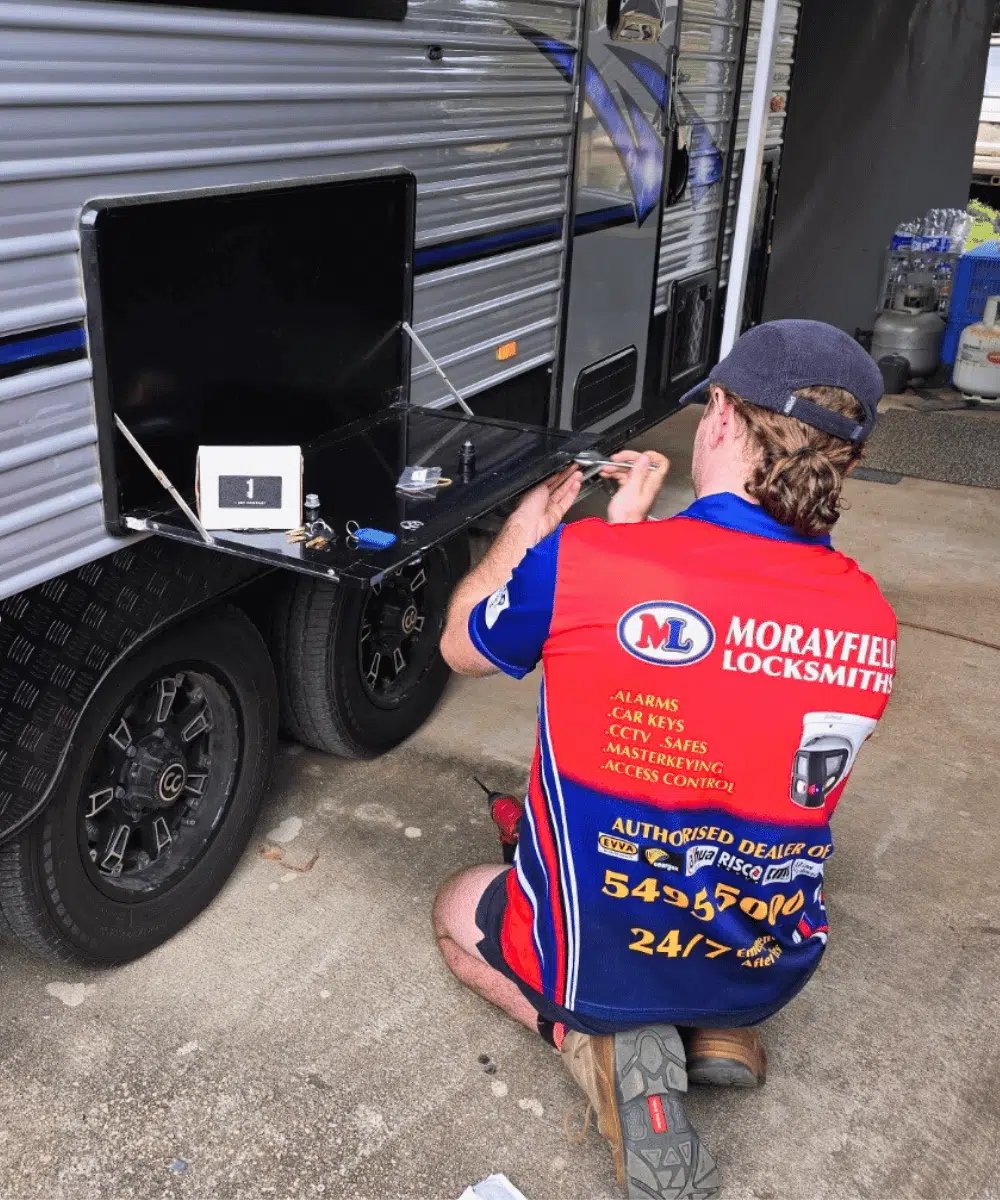
Where possible, non-destructive entry methods are preferable to drilling on a door you intend to keep.
Step-by-Step Installation Walkthrough
- Assess the door and frame for material, thickness and existing cut-outs.
- Confirm backset and borehole against the new hardware specification.
- Isolate the existing lock and test that the mechanical key still operates freely.
- Mount the reader or keypad in a position clear of the door swing.
- Fit the electric strike or smart cylinder to the existing mechanism.
- Route and terminate cabling to the controller or power supply.
- Configure credentials and set user permissions in the software.
- Test every credential, the mechanical override and the fail-safe behaviour before handover.
For a detailed practical walkthrough of the strike plate itself, see our guide on how to install electronic strike plates on your door.
Electric Strike vs Magnetic Lock: Which Suits Your Door and Frame
The electric strike is the safer retrofit choice for most existing doors because it replaces the strike plate and leaves the lock body untouched.
An electric strike works with the latch you already have, which keeps the mechanical key override intact. That matters in a power failure.
If you are still weighing the two, our comparison of electronic door locks versus magnetic locks breaks down the trade-offs by door type.
How to Integrate Access Control With a Master Key System
Integrating access control with a master key system means layering electronic credentials on top of an existing keyed hierarchy, so staff keep their keys while managers gain audit trails and time-based access. The two systems can coexist on the same door, but only if you decide up front where the electronic layer sits: on the cylinder, on the strike, or on both.
Where the Electronic Layer Sits on a Legacy Commercial Door
Most existing commercial doors in the City of Moreton Bay fall into one of four hardware families, and each integrates differently:
| Existing Hardware | Integration Path | Mechanical Override Retained? |
|---|---|---|
| Standard mortice lock with cylinder | Smart cylinder or electric strike | Yes, key still operates the latch |
| Rim latch or night latch | Electric strike on frame, reader beside door | Yes, thumb-turn or key |
| Panic bar with external cylinder | Request-to-exit sensor plus electric strike or maglock | Yes, bar always releases |
| Glass or aluminium frame | Magnetic lock with break-glass or RTE | Depends on fail-safe design |
A smart cylinder replaces the existing cylinder and keeps the same cam and latch, so the master key still works as a mechanical override. An electric strike leaves the lock body untouched and releases the latch electronically. Both approaches let you keep the existing master key hierarchy rather than rekeying the whole site.
Keeping the Master Key as the Fallback
The key decision is whether the electronic layer sits on the cylinder, the strike, or both. Keep the master key as the mechanical override and the electronic credential as the daily entry method.
A common pattern in multi-tenant buildings is to keep the master key for the building manager and issue electronic credentials to tenants.
Watch out: if the electronic layer is fitted only to the strike and the strike fails closed, the master key will not release the door unless the strike is also rated for mechanical release.
Credential Migration and User Transfer
When you move from a pure key system to a hybrid one, plan the credential migration before installation.
For multi-door commercial sites, a dedicated guide on commercial master key systems for landlords covers restricted keying and hierarchy planning in more depth. The practical rule is that the electronic system should never be the only way through a door that a master key is supposed to open.
Wiring Locks to Alarm Panels, Hubs and Credential Readers
Wired connections remain the default for commercial doors because they carry power and data reliably over long runs.
A typical setup links the credential reader to an access controller, the controller to the alarm panel or hub, and the panel to the power supply.
- Wired: stable power, higher install effort, best for high-traffic doors
- Wireless: faster retrofit, battery-dependent, check signal at the door
- Hybrid: wired controller with wireless readers, a common compromise
Industry guidance for 2026 points to mobile credentials, cloud management and integration with video and alarms as the direction of travel, according to ProdataKey’s integrated access solutions outlook.
Australian Compliance, Egress and Power Failure Planning
Access control installations should satisfy egress requirements so occupants can leave without a key or credential in an emergency, and power failure planning matters.
Locksmiths in Queensland must hold a security provider licence under the Security Providers Act 1993, and you can verify a licence through the Queensland Office of Fair Trading register. Ask for the licence number before work begins.
Ask any locksmith for their licence number and check credentials rather than relying on a phone quote alone. For a deeper look at the obligations on commercial premises, read our article on why commercial compliance requirements matter for business.
Book a Caboolture Compatibility Assessment Before You Buy Hardware
Book a compatibility assessment in Caboolture before purchasing any access control hardware.
Be cautious of a low phone quote followed by an on-site demand to drill the lock, which can end with damaged hardware and a larger bill.
Our team and mobile vans service homes and businesses across the region, from emergency lockouts to full access control and CCTV. If you are searching for a locksmith near me in Caboolture, start with booking a commercial security assessment so you know exactly what your doors need.
Your doors are probably more capable than you think. Before you replace a single deadbolt, let us confirm what your existing hardware can support and design an access control layer around it.
Frequently Asked Questions
Can old locks be integrated with an access control system?
In most cases, yes. The existing lock body often stays, and you add an electric strike, a magnetic lock or a smart retrofit kit that works with the door’s current cut-outs. The deciding factors are the door material, the backset and borehole measurements, and whether the frame can take the added hardware. A compatibility assessment confirms what will fit before any drilling happens.
Can you add access control without replacing existing locks?
Yes, retrofit access control for existing doors is common. Electric strikes release the existing latch, magnetic locks hold the door shut alongside the current deadbolt, and smart cylinders swap into the existing lock body. Keeping the original hardware usually costs less and preserves the look of older or antique doors, while still giving you keypad, app and credential entry.
How do you check whether an existing lock is compatible with electronic access control?
Measure the backset and borehole, identify the lock type and door thickness, and check the frame for room to mount a strike or maglock. Then confirm the power supply and wiring path. A locksmith can complete this access control system compatibility check on site and flag issues like weak door frames or outdated cylinders before you commit to hardware.
What is the difference between a retrofit smart lock and an electric strike?
A retrofit smart lock replaces the internal mechanism or cylinder and adds app, keypad or credential entry at the door itself. An electric strike replaces the strike plate in the frame and releases the existing latch when the access controller signals it. Smart locks suit single doors and homes; electric strikes suit commercial doors tied to a managed system.
Can access control work with a master key system?
Yes. You can integrate access control with a master key system by using a smart cylinder that still accepts a mechanical key, or by keeping the master key as a mechanical override alongside electronic credentials. This gives staff a fallback if a reader fails and lets you keep restricted keying for areas that do not need electronic entry.
What happens to access control during a power or network outage?
Fail-safe locks unlock when power drops, which suits fire egress but leaves the door open. Fail-secure locks stay locked, which is safer for storage but needs a mechanical override. Battery-backed controllers and a keyed bypass keep entry working during an outage. Plan the failure mode for each door before installation, not after.
When should a business replace rather than retrofit its existing locks?
Replace when the door frame is too weak for a strike or maglock, the lock body is obsolete, or the site needs multi-door managed access with audit logs. Retrofitting usually wins for single doors in good condition. For legacy commercial locks across several doors, a staged migration with a clear fallback plan is often the most practical path.