Table of Contents
- What You’ll Need Before You Start
- Broken Key Extraction Tools You Can Use at Home
- Step-by-Step: How to Extract a Broken Key from a Car Door
- Key Fob and Transponder Chip Risks on Modern Cars
- Common Mistakes That Make Extraction Harder
- When to Stop DIY and Call Emergency Locksmith Services
- Automotive Key Replacement Cost Factors After Extraction
- Frequently Asked Questions
Last Updated: September 16, 2026
What You’ll Need Before You Start
A snapped key in a car door is sometimes a ten-minute fix, and sometimes a job you can make far worse. Before reaching for pliers, gather the right tools and assess the situation.
Here’s what to have ready before you begin:
- Needle-nose pliers with a fine, sharp tip
- Tweezers for smaller fragments
- A paperclip or bobby pin as a probing tool
- Penetrating oil or graphite powder as a lubricant
- A torch or phone light to see into the keyway
- A clean cloth to catch the fragment and wipe debris
Never use super glue, hot glue, or any adhesive inside a lock cylinder. If the glue sets before you pull the fragment out, you’ll bond the broken piece permanently in place and turn a simple extraction into a lock replacement.
Broken Key Extraction Tools You Can Use at Home
The right broken key extraction tools depend on where the fragment sits and how much protrudes. A purpose-built extractor is ideal, but most households don’t own one, and technique matters more than the tool: cheap needle-nose pliers used correctly beat an expensive extractor used carelessly.
Needle-Nose Pliers and Tweezers
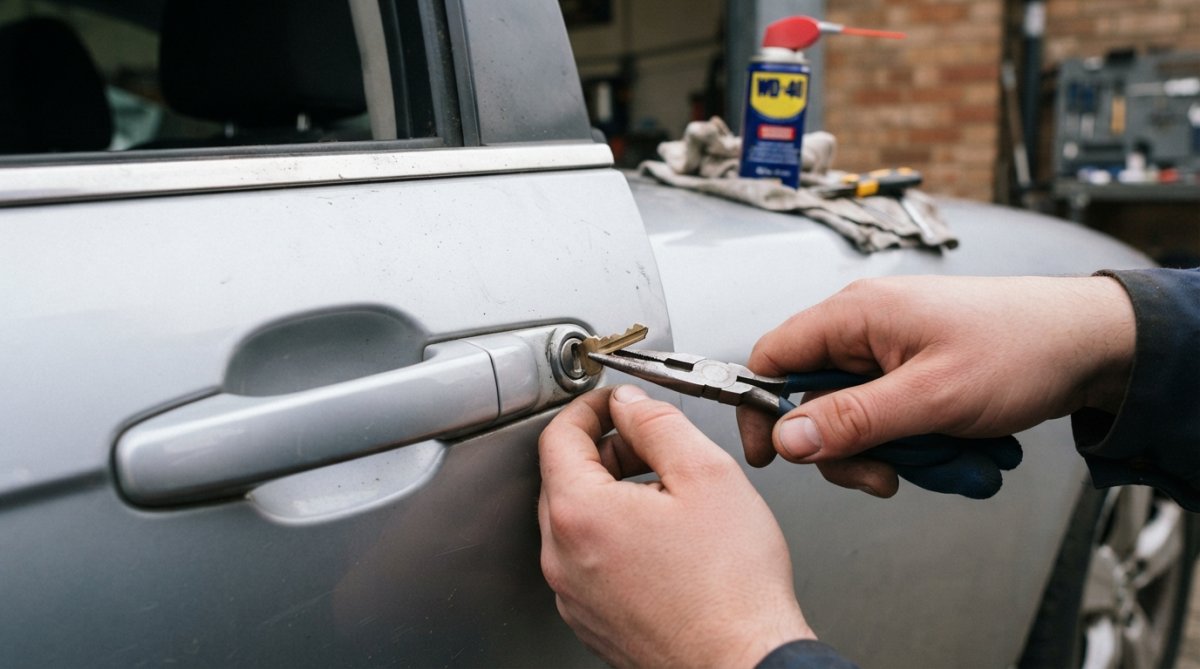
Needle-nose pliers are your first choice when a decent length of key is visible. Grip as close to the cylinder as possible and pull straight out with steady pressure, angled pulling bends the fragment and jams it. Tweezers suit thinner fragments or tight spaces; flat-tipped tweezers grip better than pointed ones.
Paperclips, Bobby Pins and Jigsaw Blades
A paperclip or bobby pin can hook behind a fragment too deep for pliers, but only if there’s a lip to catch. Straighten the clip, bend a small hook, and slide it in alongside the fragment rather than on top. A thin jigsaw blade does the same with more rigidity, but forcing it only drives the fragment deeper.
Step-by-Step: How to Extract a Broken Key from a Car Door
Can I Fix This Myself? A Quick Decision Check
Shine a torch into the keyway and answer three questions:
- How much of the fragment is visible? If you can see and grip at least 5-10 mm of clean metal above the cylinder face, DIY is usually viable. If the fragment is flush or below the face, stop, pliers will only chew the keyway.
- Is the fragment centred or wedged? A fragment sitting straight in the keyway slides out with gentle tension. One pushed against the keyway wall or rotated off-axis is jammed against the pins and needs professional extraction.
- Is the lock mechanical or electronic? A traditional mechanical cylinder tolerates careful DIY. A transponder or smart-key cylinder does not, the antenna coil and immobiliser reader sit close to the keyway, and a slipped tool can damage them.
Step 1: Assess the Damage and Fragment Position
Shine a torch into the keyway and note how the fragment sits: protruding, flush, or recessed, and centred or pushed to one side. A fragment wedged against the keyway wall must be freed before it can be pulled. Clear any metal shavings or grit with compressed air or a soft brush, packed debris blocks extraction.
Step 2: Apply Lubricant and Work the Fragment Free
Spray a small amount of penetrating oil into the keyway and wait a few minutes; it loosens the fragment and reduces friction against the pins. Graphite powder is a cleaner alternative, though messier to apply. Then use your paperclip or a thin probe to gently work the fragment side to side, free it, don’t force it.
Work in short, controlled movements, no more than a few millimetres of travel. Long strokes with a probe are how fragments get pushed past the pins and into the cylinder body, where no home tool can reach them.
Step 3: Grip, Align and Extract with Tension
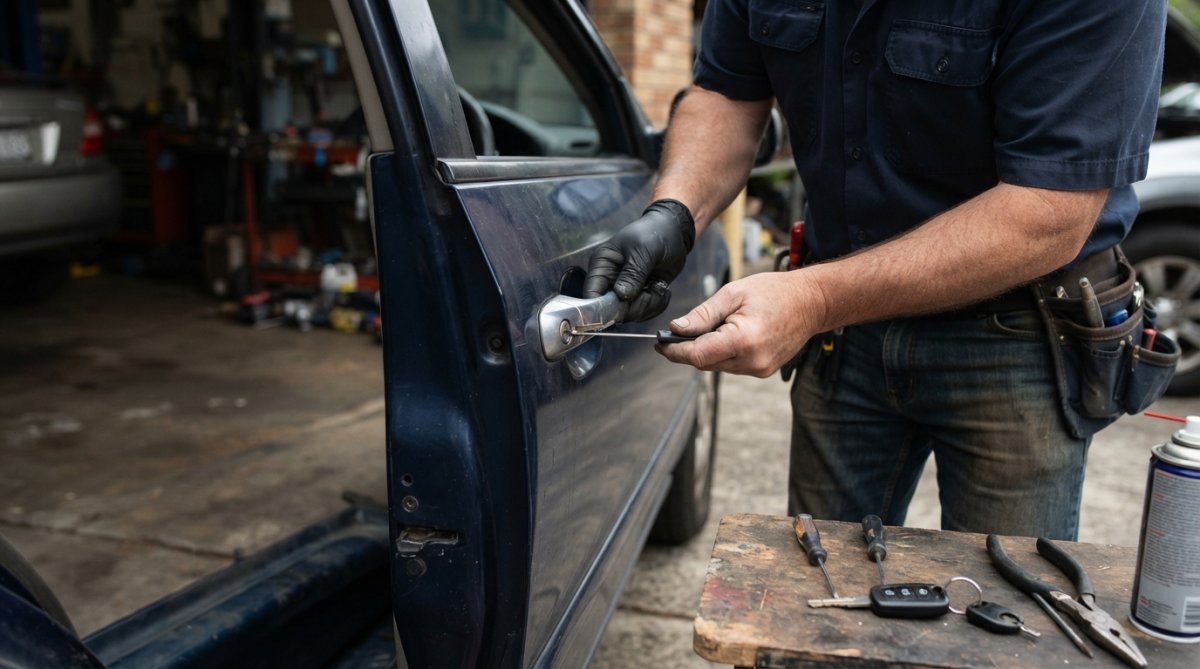
With the fragment loosened, grip it with needle-nose pliers as close to the cylinder face as possible and pull straight out, maintaining alignment with the keyway. Apply steady tension rather than a sharp yank. If it slips, reset your grip, repeated slipping usually means you’re gripping too far from the cylinder. A purpose-built key extractor, a thin, hooked steel tool that slides alongside the fragment and grips it from behind, works better on short or slightly recessed fragments, and is cheap enough to keep in the glovebox of an older vehicle with a mechanical lock.
If the fragment rotates as you pull, stop immediately. Rotation means you’re twisting the broken piece against the lock pins, and that’s how a five-minute extraction becomes a full cylinder replacement.
Step 4: Confirm the Cylinder Still Works
Once the fragment is out, test the lock with your spare key. Insert the spare, turn it gently through the full range, and listen for grinding or catching, a rough cylinder has debris or a bent pin inside and will snap the next key faster than the first. Blow out the keyway with compressed air, apply a little graphite powder, and cycle the spare a few times.
Key Fob and Transponder Chip Risks on Modern Cars
A broken key on a modern vehicle is a different problem entirely. Most keys built in the last fifteen years contain a transponder chip in the key head, not the blade, and the blade is what snaps. If the chip is intact, you may still start the car by holding the remaining key head near the ignition reader; if the chip is damaged, no mechanical extraction will get the car moving.
Common Mistakes That Make Extraction Harder
The most damaging mistake is applying force before you understand where the fragment sits. Pushing from the opposite side of the lock, a method that circulates widely online, often drives the fragment deeper when it’s firmly lodged and can complicate professional removal (r/howto discussion on broken key removal).
- Using pliers on a recessed fragment. You’ll chew up the keyway edges and damage the cylinder.
- Skipping the lubricant. Dry extraction increases friction and the chance of snapping the fragment again.
- Pulling at an angle. The fragment bends and wedges against the pins.
- Ignoring debris. Grit and metal shavings block the fragment from sliding free.
- Repeated failed attempts. Every attempt widens the keyway and increases the risk of permanent damage.
When to Stop DIY and Call Emergency Locksmith Services
Most guides treat “call a locksmith” as a catch-all. In practice there are three distinct situations, each needing a different response, knowing which one you’re in saves time and money.
Situation 1: Stop Now, Call Immediately
These are the cases where every further DIY attempt increases the cost:
- The fragment is recessed below the cylinder face. You cannot grip it, and probes will only push it deeper into the pin stack.
- The fragment has rotated or bent. It is now wedged against the pins, and pulling will damage the cylinder walls.
- The lock is a transponder or smart-key type. The antenna coil sits millimetres from the keyway; a slipped pick can disable the immobiliser reader.
- The keyway is visibly damaged. Cracked cylinder housing, chewed edges, or a cylinder that spins freely all mean the lock is already compromised.
- You need the car moving today. Every failed DIY attempt adds time you don’t have.
Situation 2: One More Careful Attempt, Then Call
If the fragment is protruding, centred, and in a mechanical lock, you have one more attempt. Set a hard limit: one attempt, five minutes, no force. If it doesn’t come free, stop and call, the second and third attempts are where most keyway damage happens.
Situation 3: DIY Is Fine, But Plan Ahead
If you got the fragment out cleanly and the lock still works, you’re not out of the woods. Book a locksmith to inspect the cylinder within a week or two, a lock that has snapped one key is more likely to snap the next, and a worn cylinder is far cheaper to replace on a scheduled visit than an emergency callout.
What a Professional Actually Does Differently
A locksmith arriving at a broken-key callout doesn’t just bring better pliers. The standard kit includes:
- Purpose-built extractors in a range of gauges, designed to slide alongside the fragment and grip it from behind without touching the cylinder walls.
- A borescope or inspection light to see the fragment’s exact position before any tool goes in.
- Cylinder shims and picks for cases where the fragment must be rotated back into alignment before extraction.
- Replacement cylinders and key blanks on the van, so a damaged lock can be swapped in the same visit.
If you’re unsure which situation you’re in, err on the side of calling. A locksmith can tell you over the phone whether your description sounds like a five-minute job or a cylinder replacement, and that call costs nothing.
Automotive Key Replacement Cost Factors After Extraction
Pricing for automotive key replacement depends on several variables, so no honest provider quotes a fixed figure without seeing the vehicle. The key type, the vehicle’s security system, and whether the cylinder survived extraction drive the cost.
The main factors:
- Key type. A basic mechanical key costs far less than a transponder key or smart fob.
- Programming requirements. Electronic keys need coding to the vehicle’s immobiliser.
- Cylinder condition. If the lock was damaged during extraction, it may need replacement.
- Vehicle make and model. Some systems require manufacturer-specific equipment.
- Urgency. After-hours and emergency callouts carry different rates to standard bookings.
| Situation | DIY Feasible? | Recommended Action |
|---|---|---|
| Fragment protruding, mechanical key | Yes | Grip with pliers, pull straight |
| Fragment flush with cylinder | No | Call a locksmith |
| Fragment recessed or jammed | No | Call a locksmith |
| Transponder key or key fob | No | Call a locksmith |
| Keyway visibly damaged | No | Call a locksmith |
Frequently Asked Questions
Can I remove a broken key from a car door myself?
You can remove a broken key yourself if the fragment is protruding enough to grip with needle-nose pliers or tweezers. Apply a small amount of penetrating oil first, then grip the exposed edge and pull steadily while keeping the fragment aligned with the keyway. If the fragment sits flush with the lock cylinder or falls inside, stop and call a professional. DIY attempts on deeply lodged fragments often push the piece further in and complicate professional broken key extraction.
Will using superglue to remove a broken key damage the lock?
Yes. Superglue can seep past the fragment into the lock cylinder, binding the pins and springs together. This turns a simple extraction into a full cylinder replacement. Stick to mechanical tools like extractors, tweezers or needle-nose pliers, and never introduce adhesives into a keyway.
What tools are needed to extract a broken key from a car lock?
The most effective tools for broken key extraction include needle-nose pliers, fine tweezers, a paperclip or bobby pin for shallow fragments, and a purpose-built key extractor tool. A jigsaw blade can work on wider keyways. Keep penetrating oil or graphite powder on hand to reduce friction. Professional locksmiths use specialised extractors that identify lock types and fragment positions to prevent further damage to the cylinder, which is why deeply lodged keys are best left to them.
Is it safe to drive the car if the key broke off in the door?
If the fragment came out cleanly and the door lock still turns with your spare key, the car is safe to drive. If any part of the key remains inside the cylinder, do not force the lock, as you risk bending pins or snapping the spare. If the broken key contained a transponder chip, the engine may not start even with a spare, because the immobiliser needs the chip signal. In that case, contact emergency locksmith services or your dealer for a replacement.