Table of Contents
- Immediate Steps to Take When Your Car Key Goes Missing
- Emergency Vehicle Lockout Assistance: When to Call a Professional
- Automotive Key Replacement Cost Factors: What Affects the Price
- Transponder Key Programming: Why It Is Not a DIY Job
- Dealership vs. Mobile Locksmith: Which Is Faster?
- Does Car Insurance Cover Lost Keys?
- What to Do If Your Keys Are Stolen
- Preventing Future Key Emergencies
- Frequently Asked Questions
Last Updated: September 11, 2026
Immediate Steps to Take When Your Car Key Goes Missing
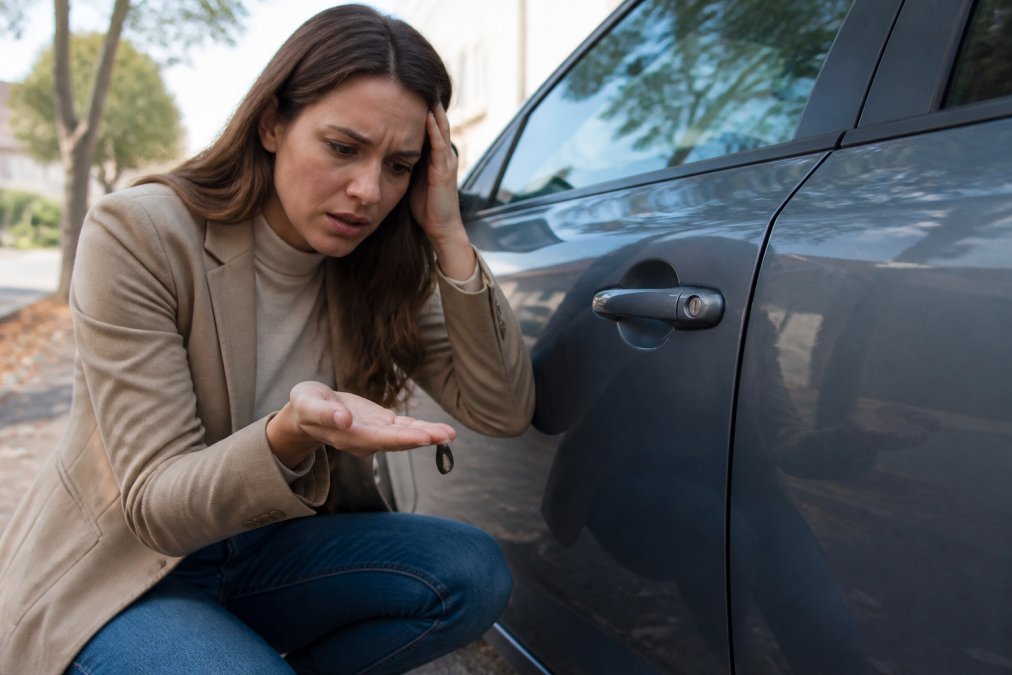
A lost car key is one of those problems that feels catastrophic in the moment but becomes manageable within minutes if you follow a clear sequence. According to Automotive Locksmith Community guidance on turnaround times, professional mobile locksmith services for lost car keys can typically be completed within a few hours. The first ten minutes matter more than most people realise.
Here’s what to do, in order.
1. Stay Calm and Retrace Your Movements
Panic makes you search badly. Before you tear the car apart, walk back through your last movements methodically. Where did you park? Did you lock the car manually or with the remote? Did you carry bags, and could the key have fallen when you set them down?
Check the most common loss points first: jacket pockets, bag linings, the gap between seats, and the boot. A surprising number of “lost” keys are found inside the vehicle within five minutes.
2. Search the Vehicle and Surrounding Area
Work outward from where you last used the key. Check under seats, in door pockets, and around the boot seal. If you were near a shop or petrol station, ask staff whether anything has been handed in.
If your key has a remote fob, press the lock button and listen for the car’s response. The sound of the locks engaging can pinpoint a key buried in a bag or under a seat.
3. Gather Your Vehicle Identification Number (VIN) and Proof of Ownership
You’ll need your VIN and proof of ownership for any replacement or reprogramming work. The VIN is visible on the driver’s side windscreen base, on the compliance plate in the engine bay, and on your registration papers.
Have your driver’s licence and registration ready. A legitimate locksmith or dealer will ask for these before cutting or programming anything, and that’s a good sign, not a delay.
| Step | What to Do | Time Needed |
|---|---|---|
| 1 | Retrace movements, check pockets and bags | 5-10 minutes |
| 2 | Search vehicle and immediate area | 10-15 minutes |
| 3 | Locate VIN and proof of ownership | 5 minutes |
| 4 | Call a mobile locksmith or dealer | 2 minutes |
Emergency Vehicle Lockout Assistance: When to Call a Professional
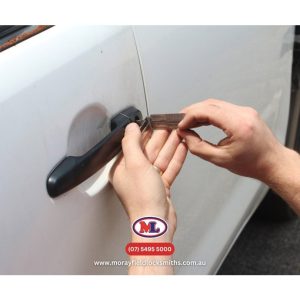
Call a professional the moment you’ve confirmed the key is genuinely gone, not misplaced. If you’re locked out with the key visible inside the car, a mobile technician can usually open the vehicle without damage. If the key is lost entirely, you’ll need replacement and programming.
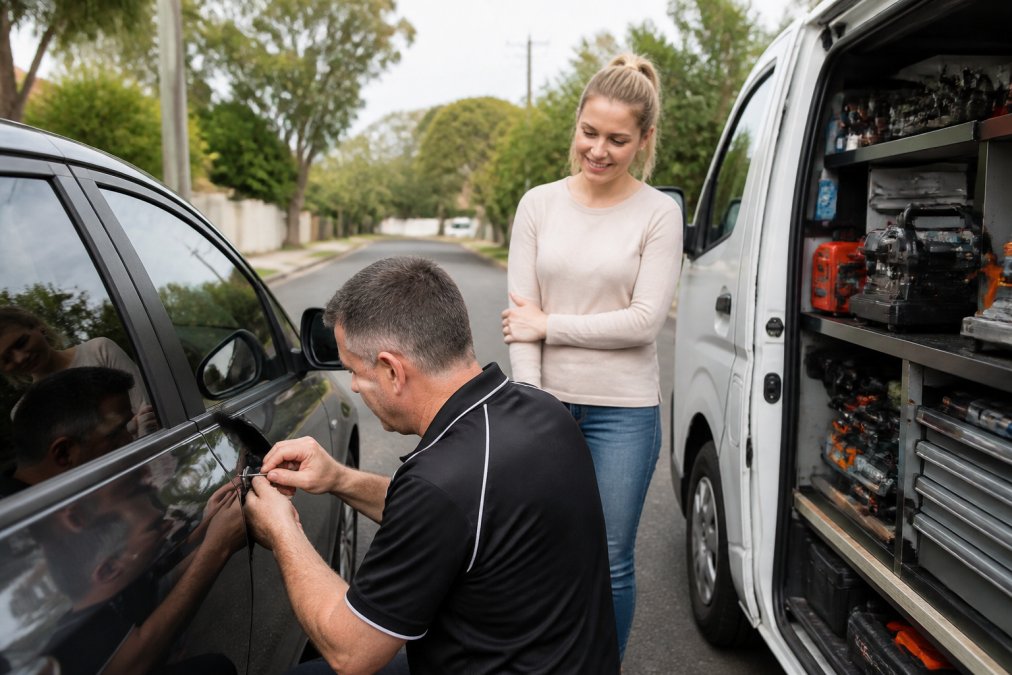
Mobile locksmith services are increasingly used for on-the-spot key cutting and programming, bypassing the need to tow the vehicle at all, according to GEICO Living guidance on mobile locksmith services. That matters when you’re stranded.
Before you call anyone, check whether your vehicle has a hidden mechanical key inside the remote fob. Many modern fobs have a small release tab that exposes a key blade for the driver’s door. It won’t start the car, but it gets you inside without damage.
Automotive Key Replacement Cost Factors: What Affects the Price
Automotive key replacement cost factors vary widely depending on the vehicle and the key technology involved. Most guides list the factors but stop short of giving a realistic range. Here’s what actually drives the figure, and roughly what to expect.
The Four Cost Drivers
- Key type, a plain mechanical blade is the cheapest; a transponder key adds a chip; a smart key or proximity fob adds push-button start and proximity sensors.
- Vehicle make and model, European and newer models generally require more complex programming and more expensive blanks. Some brands restrict key data to dealerships only.
- Programming requirement, if the key must be matched to the immobiliser, labour time increases.
- Locksmith vs. dealer, a mobile locksmith typically charges less than a franchised dealer for the same job, and avoids towing costs.
Realistic Price Ranges
Prices vary by region, vehicle, and provider, but the following ranges reflect common patterns across the market. Treat them as a guide, not a quote.
| Key Type | Typical Range (AUD) | Notes |
|---|---|---|
| Traditional mechanical key | $50 – $150 | Cut only, no programming |
| Transponder key | $150 – $400 | Includes chip programming |
| Smart key / proximity fob | $300 – $800+ | Includes immobiliser sync; higher for European makes |
| Dealer replacement (any type) | Add 30-100% | Plus potential towing and booking delays |
Why the Range Is So Wide
A $120 transponder key for a common Japanese hatchback and a $700 smart key for a European SUV are both “transponder jobs” on paper, but the programming time, security access, and blank cost differ enormously. Some manufacturers also require a security code that only a dealer can release, which pushes the job into dealer-only territory.
What You Can Control
- Ask for an upfront quote before any work begins. A legitimate provider will give one.
- Confirm whether the price includes programming and any immobiliser reset.
- Ask if a spare key can be cut at the same time, the second key is usually much cheaper than the first.
- Check your insurance excess before deciding whether to claim (see the insurance section above).
Be wary of unusually cheap quotes for smart key replacement. If the price seems too low for the vehicle type, it’s important to ensure the provider uses genuine parts and licensed programming methods to avoid issues with your vehicle’s security system.
Transponder Key Programming: Why It Is Not a DIY Job
Transponder key programming requires dealer-level diagnostic equipment and, in most cases, a security code tied to your vehicle’s immobiliser. This is not a job for a generic OBD tool bought online.
The immobiliser system is designed specifically to prevent unauthorised key duplication. That’s the whole point of it. Bypassing it requires either the manufacturer’s security credentials or specialist programming equipment that licensed automotive locksmiths carry.
Attempting a DIY reprogram with cheap tools risks locking the immobiliser entirely, which turns a key replacement into a dealer-only recovery job. The savings evaporate fast.
Never buy a blank transponder key online and try to have it cut and programmed at a general hardware store. If the chip isn’t matched correctly to your immobiliser, the vehicle may refuse to start and require a full system reset.
Dealership vs. Mobile Locksmith: Which Is Faster?
A mobile locksmith is almost always faster for emergency situations. Without a spare key, vehicle owners may be unable to use their car for over a week if relying on traditional dealership replacement processes, according to Automotive Locksmith Community benchmarks on downtime.
Dealerships often need to order the key from a manufacturer, book the vehicle in, and program it during business hours. A mobile technician comes to you, cuts and programs on site, and typically completes the job the same day.
That said, dealerships can be the right choice for certain warranty-sensitive work. For an emergency, though, the mobile route wins on speed almost every time.
Does Car Insurance Cover Lost Keys?
Some comprehensive policies include cover for lost or stolen keys, but the mechanics of claiming are where most guides stop short. Here’s what the process actually looks like.
Step 1: Check Your Product Disclosure Statement (PDS)
Your PDS is the legal document that sets out exactly what your policy covers. Search it for terms like “key replacement”, “lock and key”, “theft of keys”, and “locksmith”. Cover is usually listed as an optional extra or bundled into a higher-tier comprehensive policy. If the PDS is silent on keys, assume you are not covered.
Step 2: Confirm the Claim Type
Insurers generally treat key claims in one of two ways:
- Lost keys cover, a capped benefit, often paid as a reimbursement after you provide a receipt from a licensed locksmith or dealer.
- Stolen keys cover, usually requires a police report and may sit under the broader theft section of your policy rather than a dedicated key benefit.
Step 3: Lodge the Claim and Provide Evidence
You will typically need:
- Your policy number and vehicle registration
- A police report reference number (for stolen keys)
- A written quote or invoice from the locksmith or dealer showing the key type, programming, and any immobiliser reset
- Proof of ownership (driver’s licence and registration)
Most insurers will not reimburse a cash job without an itemised invoice, so ask your locksmith for one before work begins.
Step 4: Understand the Excess and Premium Impact
A key replacement claim is still a claim. That means:
- An excess may apply, often the same excess as a standard claim, which can exceed the cost of the key itself on older vehicles.
- A no-claim bonus may be affected, even a small key claim can reset or reduce a no-claim discount at renewal.
- A claim may be recorded, insurers share claim history, so a key claim can follow you if you switch providers.
When Not to Claim
Run the numbers first. If the replacement cost is close to or below your excess, paying out of pocket can sometimes make more financial sense than lodging a claim and risking your no-claim bonus. A mobile locksmith can often quote the full job before you decide.
Ask your insurer two questions before lodging: “What is my excess for this claim?” and “Will this affect my no-claim bonus?” The answers often determine whether claiming is worth it.
What to Do If Your Keys Are Stolen
A stolen key is different from a lost one, because someone may now have access to your vehicle. Report the theft to police and obtain a theft report reference number, which you’ll need for insurance and for any locksmith work.
Then act on the vehicle’s security. If the stolen key is a smart key or transponder, the remaining keys and the vehicle’s immobiliser should be reprogrammed so the stolen key no longer works. This is often called an immobiliser reset.
Don’t leave the car unattended in a public place if you suspect the thief knows where it’s parked. Move it somewhere secure if you can.
Preventing Future Key Emergencies
The single most effective step is a spare key. Get one cut and programmed before you need it, and store it somewhere secure and separate from your main key.
Tracking devices help too. Industry guidance recommends Bluetooth trackers like Tile or Apple AirTag attached to keyrings to prevent loss, according to Sophia Lily’s guidance on key management devices. They won’t stop a theft, but they make a misplaced key far easier to find.
A few habits that pay off:
- Keep a spare key at home, not in the car
- Attach a tracker to your keyring
- Note your VIN and keep it with your registration
- Replace a weak fob battery before it fails
The cheapest key emergency is the one you prepared for. A spare key and a tracker cost far less than an emergency replacement and a week without your car.
Frequently Asked Questions
What is the fastest way to replace a lost car key?
The fastest way is to contact a mobile automotive locksmith who can come to your location. They can cut and program a new transponder key on-site, often within a few hours. This avoids the need to tow your vehicle to a dealership, which can take over a week. Have your vehicle identification number (VIN) and proof of ownership ready to speed up the process.
Do I need my VIN to get a new car key?
Yes, the vehicle identification number (VIN) is almost always required. It allows the locksmith or dealer to confirm the correct key blank and security code for your specific vehicle. The VIN is usually visible on the dashboard near the windscreen or on the driver’s side door jamb. You will also need proof of ownership, such as your registration or title, to prevent key duplication for stolen vehicles.
Does my car insurance cover lost car keys?
Some comprehensive insurance policies include cover for lost or stolen keys, often under ’emergency assistance’ or as an optional extra. Check your product disclosure statement (PDS) or call your insurer to confirm. If covered, you may be able to claim the cost of replacement and programming. You will typically need a police report if the keys were stolen. Otherwise, you will pay out of pocket.
Can a locksmith make a key without the original?
Yes, a professional automotive locksmith can create a new key even if you have lost all originals. They use your vehicle’s VIN and proof of ownership to look up the key code, then cut a new key blade and program the transponder chip to match your car’s immobiliser system. This is a standard service and is often faster than going through a dealership.
A lost car key can derail your entire day, but it doesn’t have to derail your week. Morayfield Locksmiths has served the region since 1994 with 24-hour availability, rapid response times, and honest upfront pricing on automotive key replacement and emergency lockout assistance. Our mobile technicians carry the programming equipment needed for transponder and smart key work, so you’re not waiting on a dealership booking. Call now and get back on the road.