Last Updated: November 18, 2026
Quick Summary
Avoiding hidden locksmith fees means getting every charge confirmed in writing before any work starts. Ask for an itemised quote covering call-out fees, labour, after-hours surcharges, travel and parts, and query any charge you never approved before paying.
- A low phone quote often becomes a high final price through charges added after arrival.
- Ask for the Queensland security provider licence number and confirm it on the Office of Fair Trading register.
- A quote that says “from” a figure is not a firm quote, so confirm the upper limit in writing.
- Compare the invoice to your written quote line by line before money changes hands.
- Raise a disputed charge in writing before paying, then contact the Queensland Office of Fair Trading if unresolved.
Table of Contents
- Why Hidden Locksmith Fees Catch Out Caboolture Homeowners
- Locksmith Scam Warning Signs to Check Before You Book
- Questions to Ask a Locksmith Before Booking
- Verifying Credentials and Business Identity in Queensland
- Your Locksmith Quote Checklist: What Must Be Written Down
- Locksmith Invoice Checklist: Checking the Bill Before You Pay
- Your Consumer Rights and Complaint Process in Queensland
- Booking a Locksmith You Can Hold Accountable
- Frequently Asked Questions
Why Hidden Locksmith Fees Catch Out Caboolture Homeowners
Avoiding hidden locksmith service fees starts with one habit: getting every charge confirmed in writing before anyone touches your door.
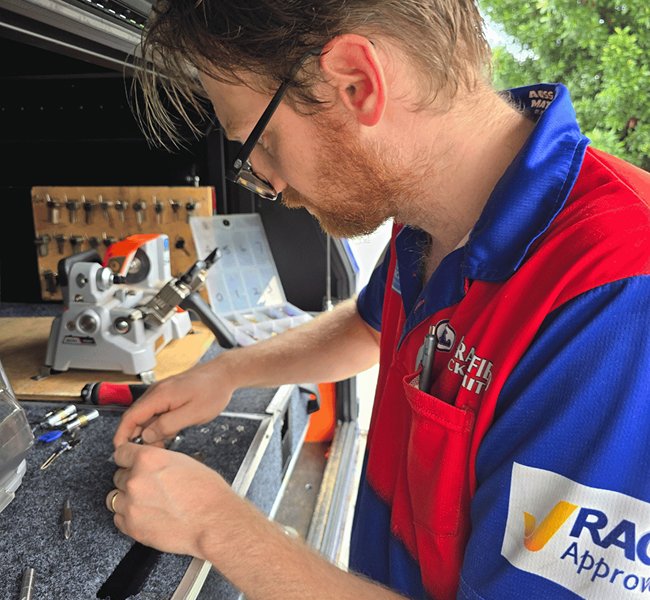
The pattern is always the same. A low quote gets you to say yes. Then the technician arrives and finds “problems” that lift the bill.
Hidden locksmith fees are charges added after the job starts that were never itemised in the original quote. They include call-out fees, after-hours surcharges, travel charges and hardware mark-ups.
Booking whoever answers first is a common way to end up with an unexpected bill, so it pays to check who you are dealing with before you dial. You can read more about how to avoid locksmith price gouging before you call.
How a Low Phone Quote Becomes a High Final Price
A low phone quote becomes a high final price through added charges that appear after arrival. The technician quotes one figure, then stacks on fees once the lock is already in pieces.
Here is how it usually unfolds:
- The bait price. A very low figure gets you to book.
- The arrival surcharge. You learn the quote excluded the call-out fee.
- The “emergency” label. A normal evening visit becomes an after-hours job.
By the time the invoice lands, the final price has nothing to do with the initial quote.
Locksmith Scam Warning Signs to Check Before You Book
Locksmith scam warning signs are easiest to spot before you book, not after. A few checks on the phone and online will filter out most bad operators.
Look for these red flags:
- No physical address, just a mobile number
- A generic greeting instead of a company name
- Refusal to give a licence number
A storefront business is easier to hold accountable than one with no fixed address.
Red Flags During the Initial Phone Call
Red flags during the initial phone call are your best early warning. The person who answers tells you a lot about who will turn up.
Watch for these:
- The phone is answered with “locksmith” or “hello” instead of a business name
- They cannot name the suburb they are based in
- They will not confirm a licence number
If any of these happen, hang up and call a local firm instead. For a deeper look at the tricks, see our guide to avoiding locksmith scams in 2026.
Questions to Ask a Locksmith Before Booking
Questions to ask a locksmith before booking should cover licensing, pricing and what happens if the job changes. Get answers to all of them before you agree to anything.
Ask these directly:
- “What is your Queensland security provider licence number?”
- “Is the call-out fee included in your quote?”
- “What is your after-hours or weekend surcharge?”
Write the answers down. If the price changes on the day, you have proof of what you were told. Our step-by-step guide to verifying locksmith pricing walks through the whole process.
Verifying Credentials and Business Identity in Queensland
Verifying credentials means checking a locksmith’s licence, insurance and business details before they arrive. In Queensland, locksmiths must hold a security provider licence under the Security Providers Act 1993.
You can confirm a licence through the Queensland Office of Fair Trading licence register. Search the business name and check the licence is current.
Then run these checks:
- Licence number matches the business you booked
- Active ABN listed on the Australian Business Register
- Real local address, not a virtual office
- Public liability insurance confirmed on request
A business with a shopfront and a verifiable licence is far harder to dodge if something goes wrong. For a shortlist of trusted local operators, read our guide to the top locksmiths in Caboolture.
Your Locksmith Quote Checklist: What Must Be Written Down
Your locksmith quote checklist should force every charge into writing before work begins.
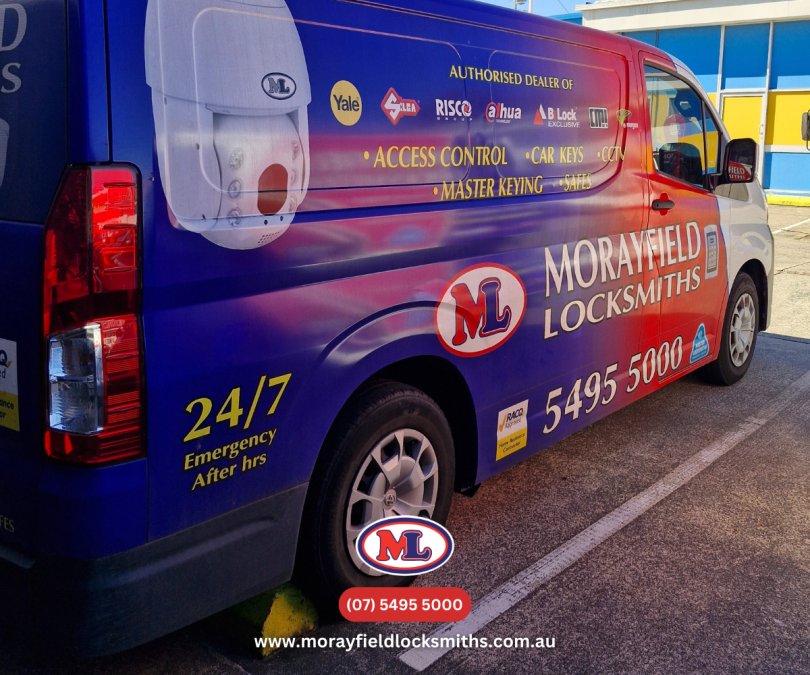
A common pattern is a phone quote that covers only the labour for the lock itself, with call-out, travel and after-hours charges added on the day.
Here is our itemised quote checklist. Ask for each line in writing, by SMS or email if a written quote is not offered on the spot:
- Call-out fee, stated as a fixed amount and whether it is charged per visit or per hour
- Labour rate and estimated hours, with the rate for each additional hour
- After-hours, weekend and public holiday surcharges, and the exact hours each applies
- Travel fee, if any, for your suburb and how it is calculated
If a provider will not put these in writing, that is your answer. Ask for a summary by text or email if a written quote is not offered on the spot.
Fee Components to Have Itemised
Fee components to have itemised are the charges most often hidden inside a single lump sum. Breaking them out shows you what you are really paying for, and it lets you compare two quotes on the same basis rather than on the headline number.
| Fee Component | What to Confirm | How It Is Usually Triggered |
|---|---|---|
| Call-out fee | Fixed or variable, and whether it covers the first hour | Charged on arrival, often excluded from phone quotes |
| Labour | Hourly rate, minimum charge, and rate after the first hour | Extra hours, seized locks, or a door that needs adjustment |
| After-hours surcharge | Flat amount or percentage, and the hours it applies | Evenings, weekends, public holidays, and sometimes early mornings |
| Travel fee | Distance-based or flat, and the suburb boundary | Jobs outside a stated service radius |
| Parts and materials | Itemised per item, with brand and model | Lock replacement, cylinders, handles, strike plates |
| GST | Included or added, and shown as a separate line | Added to the subtotal on the invoice |
Watch out: a quote that says “from” a figure is not a firm quote, so confirm the upper limit in writing.
What a Fair Written Quote Looks Like
A fair written quote names the business, the ABN, the licence number, the job described in plain terms, and a total figure that will not move unless you approve a change.
Ask the provider to confirm three things in the quote itself:
- The maximum you will pay if the job goes to plan, including GST.
- The trigger for any increase, such as a lock that must be drilled rather than picked.
- Who authorises the increase, it should be you, before the extra work starts, not after.
If a lock does need to be drilled, ask for the replacement hardware to be itemised separately so you can see the part cost and the labour cost apart.
Locksmith Invoice Checklist: Checking the Bill Before You Pay
Your locksmith invoice checklist is your last line of defence before money changes hands. Compare the bill to the quote line by line.
Check these before you pay:
- Every charge matches the written quote
- Any new charge was authorised by you first
- Parts are listed with descriptions
- Labour hours match the work done
Ask for an itemised invoice if you get a lump sum. A legitimate business will provide one without fuss. If a charge appeared that you never approved, query it before paying.
Your Consumer Rights and Complaint Process in Queensland
Your consumer rights protect you when a locksmith charges more than quoted or performs unnecessary work. Australian Consumer Law applies to locksmith services in Queensland, and the state adds its own licensing and complaint machinery on top.
Under the Australian Competition and Consumer Commission’s consumer guarantees, services must be delivered with due care and skill, match their description, and be fit for purpose.
Queensland also regulates who may do the work. Locksmiths must hold a security provider licence under the Security Providers Act 1993, and the Queensland Office of Fair Trading licence register lets you confirm a licence is current before you book.
Escalating a Disputed Locksmith Invoice
Escalating a disputed invoice works best in writing and in order. Keep the quote, the invoice, any text messages, and photos of the lock before and after the work.
- Ask for the itemised invoice and compare it to your written quote, line by line.
- Raise the issue in writing with the business first, stating the quoted figure, the invoiced figure, and the difference you dispute.
- Contact the Queensland Office of Fair Trading if the business will not resolve it. The OFT handles consumer complaints about traders and can refer matters on where appropriate.
- Consider the Queensland Civil and Administrative Tribunal (QCAT) for a minor civil dispute if the amount in dispute is within its limit. QCAT is the state’s forum for small consumer claims and does not require a lawyer.
- Keep records of every step, including dates and who you spoke to.
Watch out: paying the full invoice before you dispute it can make recovery harder. If you believe a charge was never authorised, query it in writing before money changes hands and ask for the itemised breakdown first.
What to Do If the Locksmith Will Not Provide a Licence Number
If a locksmith will not provide a licence number, treat it as a red flag and do not authorise further work.
A business that cannot or will not supply these details is hard to hold accountable after the job. Documentation is everything: a written quote, an itemised invoice, and a licence number that matches the business give you a clear case if you need to escalate.
Booking a Locksmith You Can Hold Accountable
Booking a locksmith you can hold accountable means choosing a business with a real address, a verifiable licence and clear pricing.
Morayfield Locksmiths has been a family-owned business since 1994, backed by a physical shop in Caboolture.
We aim to confirm pricing upfront and explain what a job involves before we start. For urgent help, our emergency locksmiths in Caboolture service is available around the clock.
Hidden fees thrive on confusion and rushed decisions. Slow down, ask for the quote in writing, and check the licence before you book.
Frequently Asked Questions
How can I avoid hidden fees when hiring a locksmith?
Get the scope and the charges confirmed in writing before any work starts. Ask for the call-out fee, labour rate, after-hours or weekend surcharge, travel fee and hardware costs to be itemised separately, then confirm whether GST is included. Ask what happens if the job turns out to be more complex than described. A locksmith who answers these plainly and puts them in writing is far less likely to surprise you at payment time.
Can a locksmith change the price after arriving?
A price can legitimately change if the job is genuinely different from what was described, for example a lock that cannot be picked and needs another approach. What should not happen is a jump with no explanation and no approval. Ask for the reason, the new figure and your options before anyone touches the door. If you did not authorise the extra work, say so clearly and ask for the original agreed scope to be honoured.
What should I do if a locksmith charges more than the agreed quote?
Ask for an itemised invoice showing exactly what the extra covers, and keep any written quote, text messages or notes from the phone call. Pay only what you agreed if the scope has not changed, and put your concerns in writing to the business. If you cannot resolve it directly, contact the Queensland Office of Fair Trading for advice on your consumer rights and the complaint process.
Should I approve extra locksmith work before it starts?
Always. Ask for the reason the extra work is needed, the additional charge and how long it will take, then give a clear yes or no. A trained locksmith can pick or bypass most residential locks without damaging the hardware, so drilling should be a last resort explained to you first. Getting verbal approval on record, or a quick text confirmation, protects both sides if the invoice is questioned later.